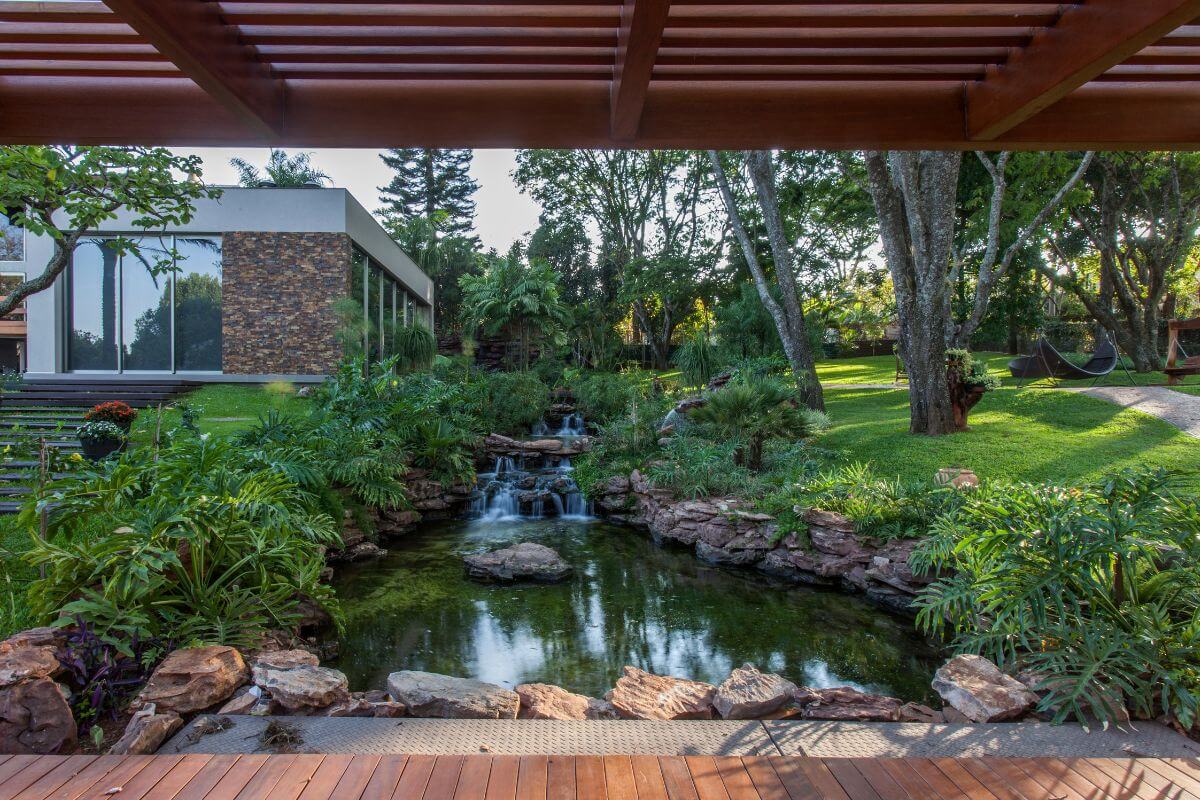
Combining plant species, natural materials, textures, sounds and constructive elements, this type of landscape environment invites you to experience
Increasingly present in contemporary projects, the sensory garden goes beyond aesthetics and proposes a new way of interacting with the environment. The idea is to transform green areas into living spaces, capable of awakening sensations, promoting relaxation and stimulating a deeper connection with nature.
Combining plant species, natural materialstextures, sounds and constructive elements, this type of landscape space invites you to experience — whether to slow down your routine, relieve stress or simply enjoy the moment. Furthermore, it is designed to intentionally stimulate the human senses (sight, hearing, touch, smell and, in some cases, even taste).
To delve deeper into the characteristics of this type of space, landscapers Cleber and Arthur Depieri, from the Depieri Paisagismo office, comment on the main aspects of the sensory garden below. Check it out!
Essential elements
According to professionals, “a well-executed sensory garden must bring together elements that promote a multisensory experience”. Among them, the planned plant diversity stands out, with species that offer contrasts in textures, colors, aromas, shapes and movements. Tactile stimulation is also essential, through soft, rough, velvety or structured leaves, as well as the presence of aromatic elements, with plants rich in natural essential oils.
Sound components, such as the sound of wind in the foliage and moving water, contribute to immersion in the space (as does the inclusion of relaxing background music, in some cases). Finally, the use of natural materials — such as stonewood, tree bark and pebbles — reinforces the biophilic connection, while accessibility and comfortable circulation ensure a direct and inclusive interaction with the environment.
“Among the main benefits of a sensory garden are the reduction of stress and anxiety, provided by the connection with natural elements, and the improvement of physical and emotional well-being, widely evidenced in neuroarchitecture and biophilia studies. Furthermore, it promotes cognitive and sensory stimuli, while contributing to the aesthetic enhancement of the environment. Finally, it also favors the creation of more humanized spaces, which invite pause and contemplation”, comments Cleber Depieri.
Step by step
Creating a sensory garden requires technical planning and an accurate reading of the environment. In general, the process begins with analyzing the location — considering insolation, ventilation, temperature, humidity and the future use of the space. Then, define the sensory objective of the projectprioritizing the senses you want to stimulate.
“The next stage involves the selection of species, taking into account factors such as climate resistance, level of maintenance and compatibility between plants. At the same time, materials and textures are chosen, integrating floors, paths and external furniture”, they explain.
It is also essential to develop an adequate irrigation and drainage project, which contributes to the longevity of the garden. Finally, the execution must have technical monitoring, ensuring that the sensorial concept is preserved during implementation.
Indoor or small spaces
It is possible to create sensory gardens in apartments with reduced square footage. “Even in dry environments, balconies or internal areas, it is perfectly possible to implement a sensory garden. In these cases, the project must prioritize multifunctional species, capable of stimulating more than one sense simultaneously, in addition to aromatic plants and tactile, which provide great sensorial impact even on a small scale”, comments Arthur Depieri.
Simple adaptations help to insert plants into smaller environments. “The use of strategically positioned vertical gardens and pots is also essential to optimize the available space. Finally, ease of maintenance must be considered, especially indoors”, he highlights.
Main precautions
Caring for a sensory garden goes beyond aesthetics and involves continuous and careful maintenance. “This includes regular pruning, fertilization and phytosanitary control of plants, as well as paying attention to excessive growth, which can compromise sensory interaction”, say the landscapers.
It is also important to provide for the replacement of aromatic species, which tend to lose intensity over time, in addition to conserving natural materials, such as wood and stones. “Safety is another essential point, especially in projects with the presence of children or petsrequiring the choice of non-toxic species and the elimination of sharp elements. With these precautions, the sensory garden maintains its therapeutic and experiential function over time”, they add.
By Karina Monteiro