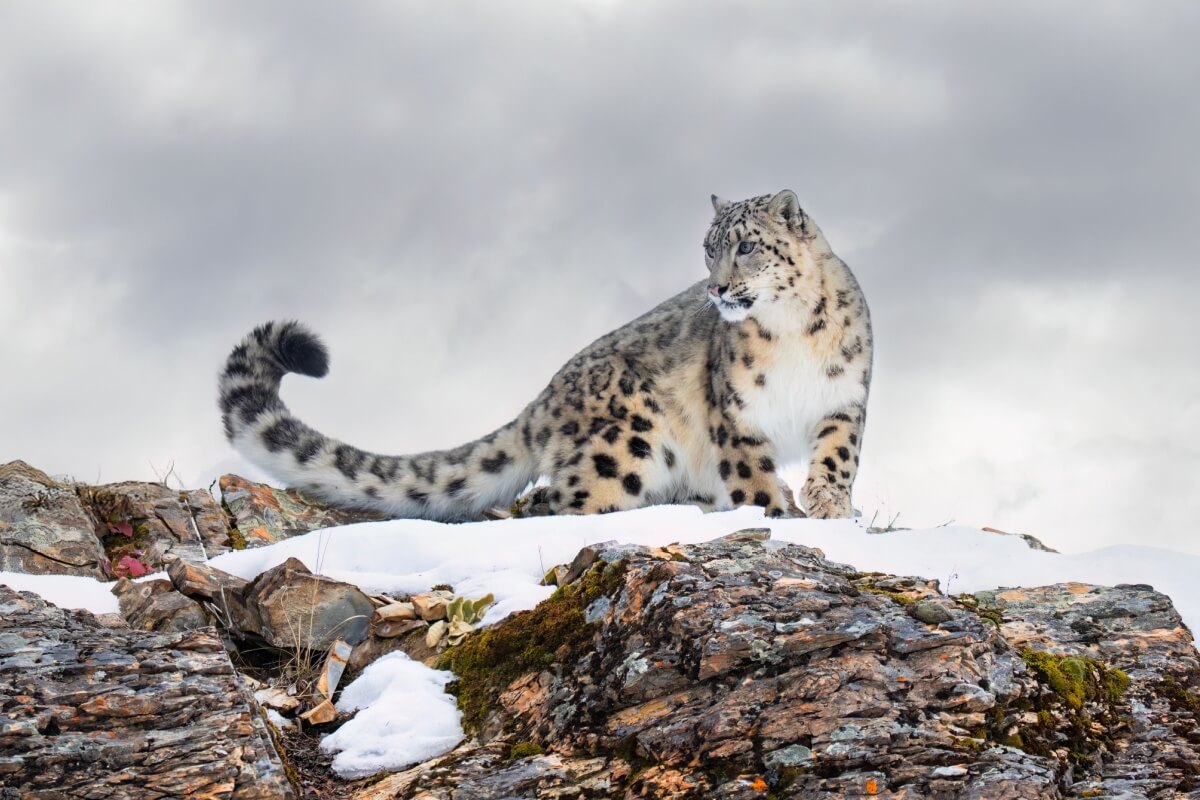
This animal from the Asian mountains draws attention for its imposing appearance and surprising abilities
EdiCase Editorial
The snow leopard is one of the most fascinating felines on the planet. Found in mountainous regions of Central Asia, it lives in cold and difficult to access places, such as the Himalayas and the mountains of Mongolia. Known for its thick fur and long tail, this animal can survive in extremely cold and hostile environments.
Despite being called a leopard, it has unique characteristics that differentiate it from other big cats. Discreet and silent, it is rarely seen in the wild. In addition to its impressive beauty, the species also plays an important role in the ecological balance of the mountainous regions where it lives.
Next, check out some interesting facts about the snow leopard!
1. Lives in extremely high mountains
O natural habitat The snow leopard is located in mountainous areas of Asia, generally between 3,000 and 5,000 meters above sea level, with very low temperatures, intense winds and little vegetation. Even in the face of these difficult conditions, the feline manages to survive thanks to adaptations developed throughout evolution. Its presence is recorded in countries such as China, Nepal, India and Pakistan. The fact that it lives in such isolated regions helps protect it from some predators, but also makes research and conservation actions difficult.
2. Your tail acts as a natural blanket
The snow leopard’s tail can measure almost the same size as the animal’s body. In addition to helping with balance during jumps and walking on rocky terrain, it also serves as protection against the cold. When resting, the feline usually wraps it around its face. The thickness of the tail also stores fat, helping the animal in times of food scarcity.
3. The snow leopard barely roars
Unlike other big cats, the snow leopard cannot produce loud roars like those of a snow leopard. lion or tiger. This happens due to the anatomy of your throat and vocal structures. Instead, he makes softer sounds like meows, purrs, hisses, and small grunts. This silent communication also helps the animal remain inconspicuous in its natural habitat. As it lives in open and mountainous regions, very loud sounds could betray its location to prey or threats.
4. He can make impressive jumps
The snow leopard is considered an excellent jumper. Thanks to its strong and muscular hind legs, it can jump distances of up to 15 meters over mountainous terrain. This ability is essential for hunting and moving between rocks, cliffs and steep areas. The flexible body and long tail help with balance during these movements. Furthermore, their wide paws work almost like “natural snowshoes”, better distributing their weight over the snow. This prevents it from sinking easily into frozen surfaces.
5. Your coat changes with the season
The snow leopard’s coat is one of the most important adaptations of the species. In winter, it becomes even thicker to protect you from the freezing temperatures of the mountains. In less cold periods, the hair becomes a little lighter. The grayish color with dark spots helps in camouflage between rocks and snow, making it difficult to be seen by prey or threats.
6. The snow leopard is a solitary animal
This feline usually lives alone for most of its life. Meetings between males and females generally only happen during the breeding season. Outside this period, each animal maintains its own territory in the mountains, reducing disputes for food in regions where prey may be scarce. Furthermore, stealth helps the snow leopard avoid danger and save energy. Even though it is solitary, it uses scent marks and soft sounds to communicate with other individuals.
7. It is an important predator for environmental balance
The snow leopard occupies the top of the food chain in the Asian mountains. Their diet includes animals such as wild goats, sheep and small mammals. By controlling the population of these species, the feline helps maintain the ecological balance of the environment. Without sufficient natural predators, some prey could multiply excessively and cause impacts on local vegetation.
8. The species faces the risk of disappearing
Despite all its ability to adapt, the snow leopard faces several threats. Illegal hunting, habitat destruction and climate change are among the main problems affecting the species. Global warming could change the mountainous environment and reduce the cold areas where the animal lives. Furthermore, conflicts with animal breeders also represent a risk, as the feline can attack herds in search of food.