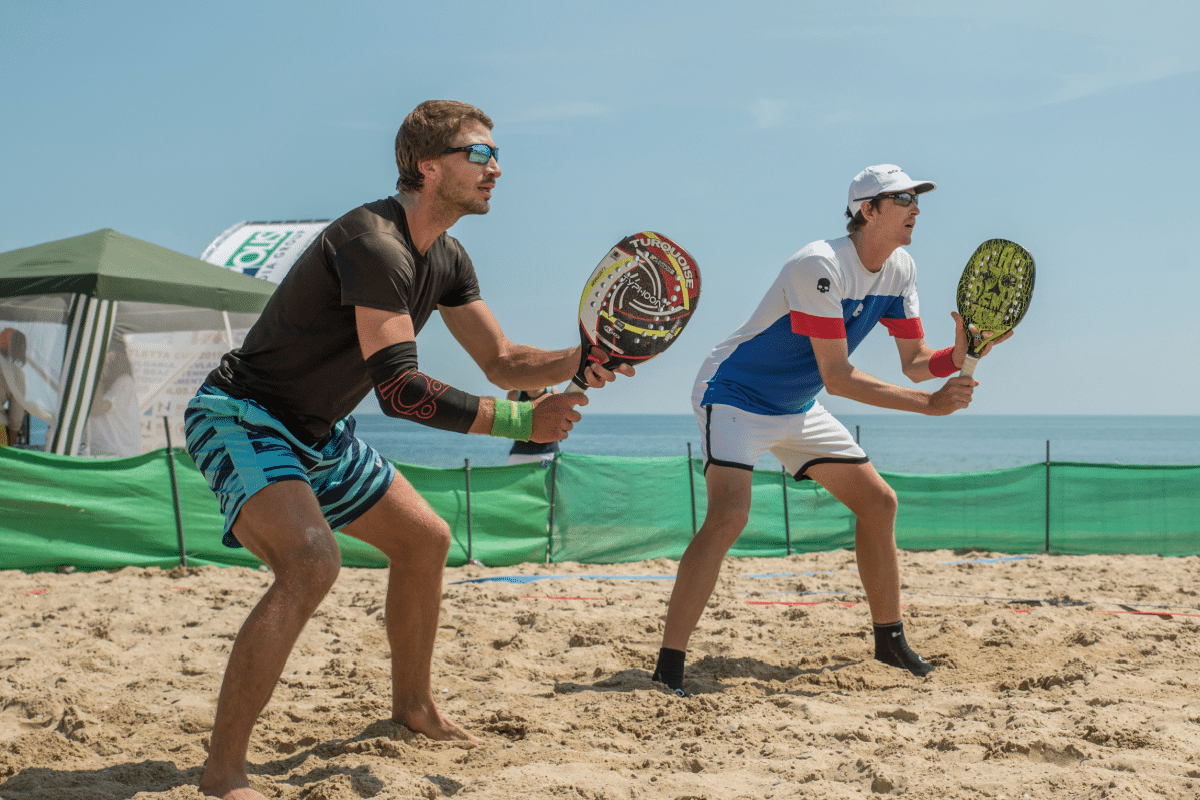
Most problems involving injury risks can be avoided with simple preparation and adaptation measures
EdiCase Editorial
Run by the sea, play a game of beach tennis or playing footvolley are increasingly popular activities among Brazilians. The growth of these sports has led more people to transform the sand into a space for sports, especially during trips, weekends and outdoor leisure time.
The advancement of beach tennisfor example, helps illustrate this movement. According to estimates from the Brazilian Tennis Confederation (CBT), the sport already brings together more than 1.5 million players in the country. The number has more than tripled since 2021, when the CBT indicated 400,000 people practicing the sport.
In Rio de Janeiro, for example, another sport traditional beaches also continues to gain relevance. Created on the sands of Rio in the 1960s, footvolley could become an officially recognized sport in the country. A bill in progress proposes to include it in Brazilian sports legislation.
For Rodrigo Pastore, orthopedics doctor at AmorSaúde, a network of partner clinics of Cartão de Todos, practicing sports on the sand can bring important benefits to physical conditioning, as long as the body is prepared to deal with the demands of this type of terrain. “Sand is an unstable surface and absorbs part of the impact, which can reduce the direct overload on joints compared to asphalt”, he explains.
However, sports played on the sand require adaptations from the body and can increase the risk of injuries when performed without adequate preparation. “[…] This instability requires more work from the muscles, especially the feet, ankles, legs and trunk, increasing the demand for balance, coordination and strength. When the body is not prepared, the risk of injury can increase”, warns the doctor.
Common injuries caused by sand sports
Although each modality has specific characteristics, some complaints frequently appear in orthopedics offices among those who practice activities in the sand. Among the most common injuries are:
1. Ankle sprains
The instability of the terrain increases the risk of kinksespecially during sudden changes of direction, running or landing after jumps.
2. Achilles tendonitis
The tendon located at the back of the ankle is heavily stressed in activities involving sprints, accelerations and impulses, and can suffer inflammatory processes due to overload.
3. Lower back pain
The constant need to stabilize the trunk can increase the load on the lower back, especially in sedentary people or people with muscle weakness.
4. Muscle injuries
Calves and thighs are among the muscle groups most required when practicing sports on the sand. When there is excess effort or lack of conditioning, strains and strains can occur.
5. Overload on the knees and shoulders
Constant movement and jumping can cause discomfort in the knees. In beach tennis and footvolley, repetitive overhead movements also increase the risk of shoulder pain and injuries.
Soft or firm sand?
Rodrigo Pastore highlights that the type of sand also influences the intensity of physical effort and the risk of injuries. “Soft sand requires more muscular effort and increases instability, which can lead to overuse injuries, especially in the ankles, calves and Achilles tendon. Firmer sand allows for more efficient running with less energy expenditure”, he explains.
For those who usually run close to the sea, the doctor gives an additional warning: “It is important to alternate the direction of running, as the natural slope of the beach can cause asymmetrical overload on the knees, hips and spine”.
When pain stops being normal
Feeling some muscular discomfort after practicing physical activity can be expected, especially for those who are starting a sport or have recently increased their exercise. training volume. However, some signs indicate that it is time to seek medical evaluation:
“Slight muscle pain in the first 24 to 48 hours after exercise may be normal. The alert arises when the pain is intense, persists for several days, worsens with movement, causes limping, limits daily activities or is accompanied by swelling, popping, a feeling of instability or loss of strength. In these cases, it is important to seek medical evaluation”, explains the doctor.
How to prevent injuries without giving up sand sports?
Most problems involving the risk of injury during sand sports can be avoided with simple preparation and adaptation measures. “Prevention begins with gradual progression of training load, muscle strengthening, heating and respect for recovery periods. It is also important to maintain good hydration, avoid sudden increases in activity volume and perform specific exercises to stabilize the ankles, knees and trunk”, highlights the orthopedist.
By Nayara Campos