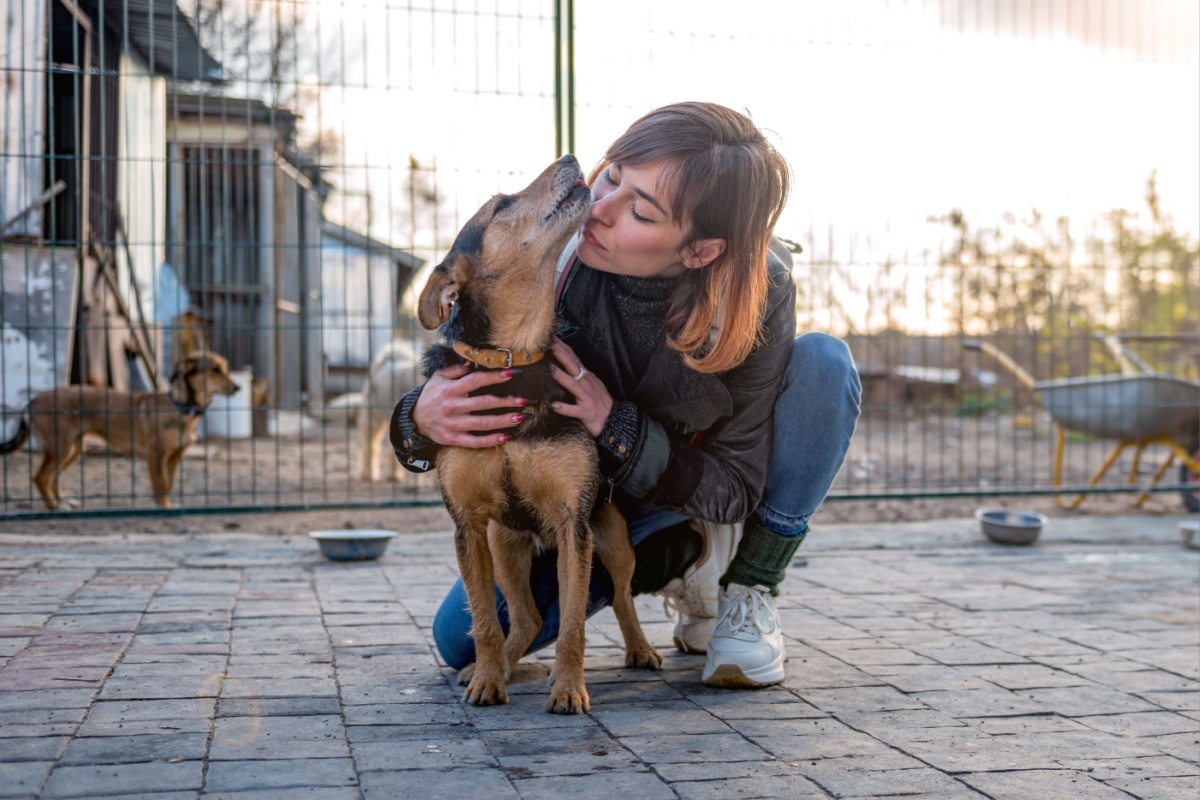
Survey “Panorama of Adoption in Brazil – NGOs” highlights the “invisibility” of pets outside the aesthetic standard and warns of the high rate of return in the first three months
EdiCase Editorial
What defines the luck of a dog or cat waiting for a home? To understand the bottlenecks and opportunities of the animal protection ecosystem in the country, the research “Panorama of Adoption in Brazil – NGOs”, commissioned by GoldeN and the Instituto de Medicina Veterinária do Coletivo (IMVC), and carried out by Opinion Box, brings unprecedented data on the reality of shelters.
The study reveals that adoption in Brazil is still strongly guided by an aesthetic and practical bias, which condemns elderly animals, with dark fur and health conditions to “invisibility”, in addition to highlighting a silent crisis post-adoption.
The survey mapped the scenario dominated by private shelters/NGOs (46%) and independent shelters (37%), and found that the majority operate in a lean manner — simultaneously caring for up to 100 dogs and cats (54%) and donating, on average, up to 5 animals per month (66%).
Within this already reduced reality of chances, the mathematics of preference does not conclude: while adopted animals The most common are puppies (81%) and small dogs (92%), the waiting list is led by elderly animals (59%) and adults (34%). Age is, in fact, the main limitation for adoption, being mentioned by 86% of institutions.
The difficulty also extends to color and health
Animals with black/dark fur face great barriers to being chosen by a family (69%), as well as pets with physical and chronic disabilities or limitations (a difficulty reported by 75% of NGOs). Among cats, stigma falls heavily on diseases such as FIV/FELV (75%).
“What the data shows is not an act of evil, but behavior guided by fear of the unknown and the search for an ideal. adopter looking for a puppy using an aesthetic filter and projects onto it the idea of a ‘blank canvas’, without trauma and easy to adapt, while seeing in the elderly, black animal or animal with some health condition a future of greater complexity and veterinary costs”, analyzes Lucas Galdioli, vice-president of the Instituto de Medicina Veterinária do Coletivo (IMVC).
This harms the animals that continue to wait for a home. “This bias, often unconscious, creates an invisibility that makes it difficult to adopt precisely the most vulnerable animals. The research highlights the need to expand educational actions on responsible ownership and strengthen post-adoption support to promote more sustainable relationships and reduce returns”, he adds.
The illusion of the finish line and the 3-month crisis
The “Panorama of Adoption in Brazil – NGOs” research suggests that adoption is still often treated as the end of the process, when the main challenge begins in the adaptation period, with most returns happening in the critical window of the first three months. According to the study, 71% of NGOs assess that adopters only have “basic knowledge, with relevant gaps” about responsible custody. The owner mainly underestimates the animal’s adaptation (73%) and veterinary care (57%).
This scenario highlights an urgent need for prior awareness: the success of adoption depends on aligning expectations before the animal go home. More than the impulse of the moment, it is essential to educate the future guardian about the real responsibilities that await him to avoid returns.
According to NGOs, subsidies for consultations, behavioral support and practical education are essential to avoid returns. This perception is confirmed by the study “Perceptions and Habits about Adoption”, also by GoldeN/Opinion Box, carried out with tutors and released in April, which reports that the biggest challenges after adoption were precisely health expenses (27%) and adapting the child’s behavior. pet (32%).
For Felipe Mascarenhas, head of marketing at GoldeN, the brand’s role in encouraging adoption necessarily involves promoting transparency and awareness. “Choosing a pet it should not be based on a ‘checklist’ of perfection. Our commitment, when encouraging adoption, is also to demystify the fears that leave so many animals ‘invisible’ in shelters. To combat the return cycle, it is necessary to inform the future guardian about the need for patience in adapting and the importance of financial planning. This way we help people make a much more mature and responsible decision, ensuring that the ‘yes’ to a new pet be for life”, he points out.
Cats lead adoptions in reflection of verticalization
Adopters are preferring cats. The survey with NGOs reveals that felines are already the most adopted (41%) compared to dogs (32%), a fact that confirms in practice the profound cultural transformation known as “catification”. Data from the MVAbrigos Brasil annual report indicate a predominance of exits and cat adoptions compared to dogs over recent years, suggesting greater fluidity in feline adoptions.
According to the Instituto Pet Brasil (IPB), the population of cats in Brazilian homes already exceeds 30.8 million, and their growth was 96% higher than that of dogs between 2022 and 2023.
This phenomenon is not a coincidence, but a direct reflection of Brazilians’ search for a pet that adapts to modern life, marked by smaller spaces and more independent routines. A fact that directly connects to the search for small dogs. In both cases, “practicality” — whether the cat’s independence or the dog’s size — became a decisive factor in choosing the new companion animal.
By Jessica Santos