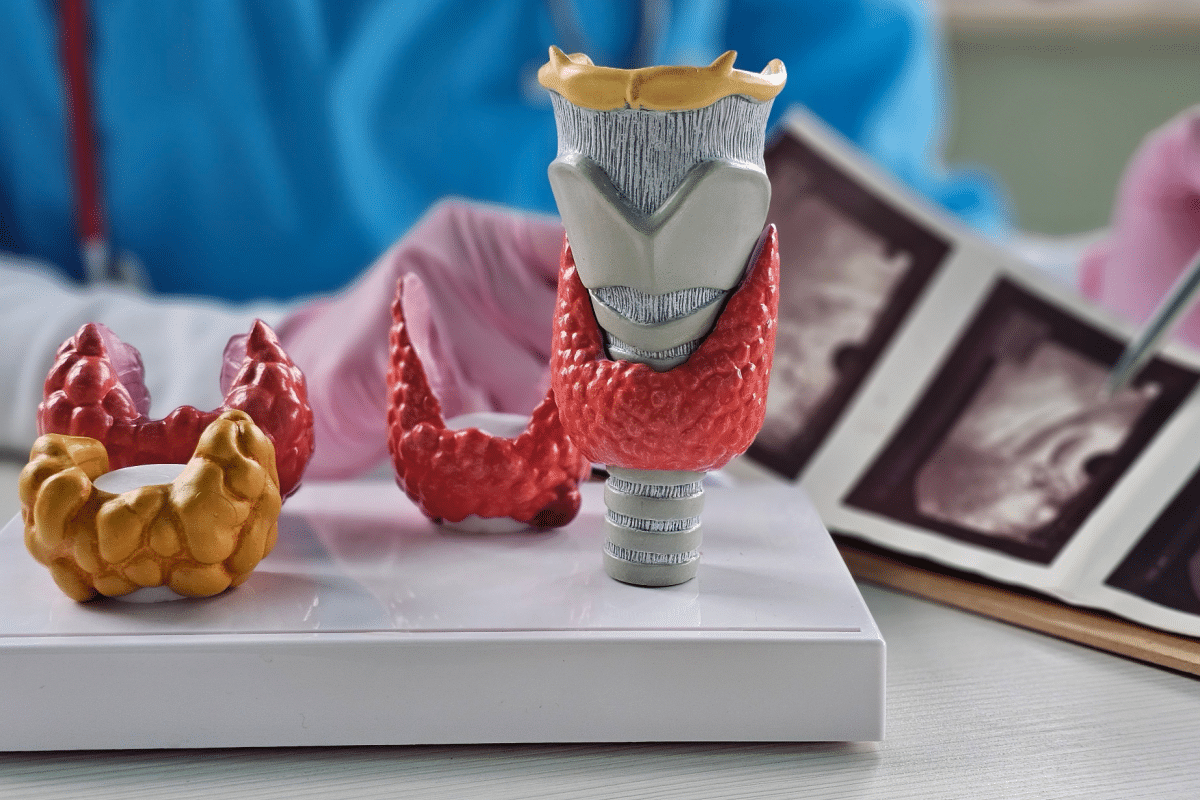
This type of tumor develops in the thyroid gland, located in the front part of the neck, just below the larynx.
EdiCase Editorial
The thyroid is a hormone-producing gland that regulates metabolism and influences functions such as heart rate and body temperature. It is also linked to development during childhood and adolescence, the regulation of menstrual cycles, fertility, weight, memory, concentration, mood and emotional control.
When there are changes in this gland, different health problems can arise, including thyroid cancer, one of the main tumors of the endocrine system and the fifth most common type of cancer among women.
The incidence of the disease has been growing in Brazil and around the world. In 2026, according to the National Cancer Institute (INCA), it is estimated that 16,450 new cases will appear, well above the 9,200 registered in 2014. The increase is attributed to improvements in the diagnostic process, such as the use of ultrasound exams and new biopsy techniques. Despite the growth, mortality rates remain low: there were 988 deaths in the country in 2023, according to the auxiliary body of the Ministry of Health.
Next, the doctor specializing in head and neck cancer Vinícius Freire, from Oncologia D’Or, clarifies the main points about thyroid cancer. Check it out!
Symptoms of Thyroid Cancer
Most of the time, patients do not present symptoms because they have small tumors. As the condition progresses, nodules, lumps or swelling may appear in the neck, difficulty swallowing, hoarseness or other changes in the voice. The diagnosis is made based on clinical history, physical examination and an ultrasound of the neck to identify a nodule with suspicious characteristics.
Risk factors
Risk groups for the disease include adults aged 50 or over, women, obese or overweight people, people with diets low in iodine, with a family history of thyroid cancer or with a history of neck irradiation or radiotherapy, even at low doses (especially in childhood).
Thyroid cancer is more common in women for reasons that are not yet fully understood. This neoplasm affects five times more women than men. There are hypotheses that associate the disease with hormonal factors and disparities in access to exams.
Treatment for thyroid cancer
More than 90% of thyroid tumors are papillary and follicular carcinomas, which have a high chance of cure, especially when diagnosed early. They are also known as well-differentiated carcinomas due to their structural and functional similarity to normal thyroid tissue.
The main form of treatment for this type of cancer is surgery, which can be performed to completely or partially remove the thyroid, depending on the degree to which the disease is diagnosed. When there is a high risk of the disease returning, supplementation with radioactive iodine therapy is recommended, which consists of ingesting a small amount of this substance to destroy the remaining tumor tissue.
In recent years, the treatment of metastatic differentiated thyroid cancer that does not respond (refractory) to radioactive iodine has evolved significantly with the incorporation of molecular targeted therapies. Immunotherapy may also be recommended if the patient has advanced disease, refractory to radioactive iodine and with a high tumor mutational load.
Preventing the disease
Some precautions can help prevent thyroid cancer, such as weight control, a healthy diet and the practice of physical activity. Genetic mapping is indicated for people with two first-degree relatives who have had well-differentiated thyroid carcinoma or any case of medullary thyroid carcinoma. In the case of medullary thyroid carcinoma, the objective is to identify the existence of a mutation in the RET gene — the main marker of this subtype of tumor, which, despite being rare, is more aggressive.
By Nora Ferreira