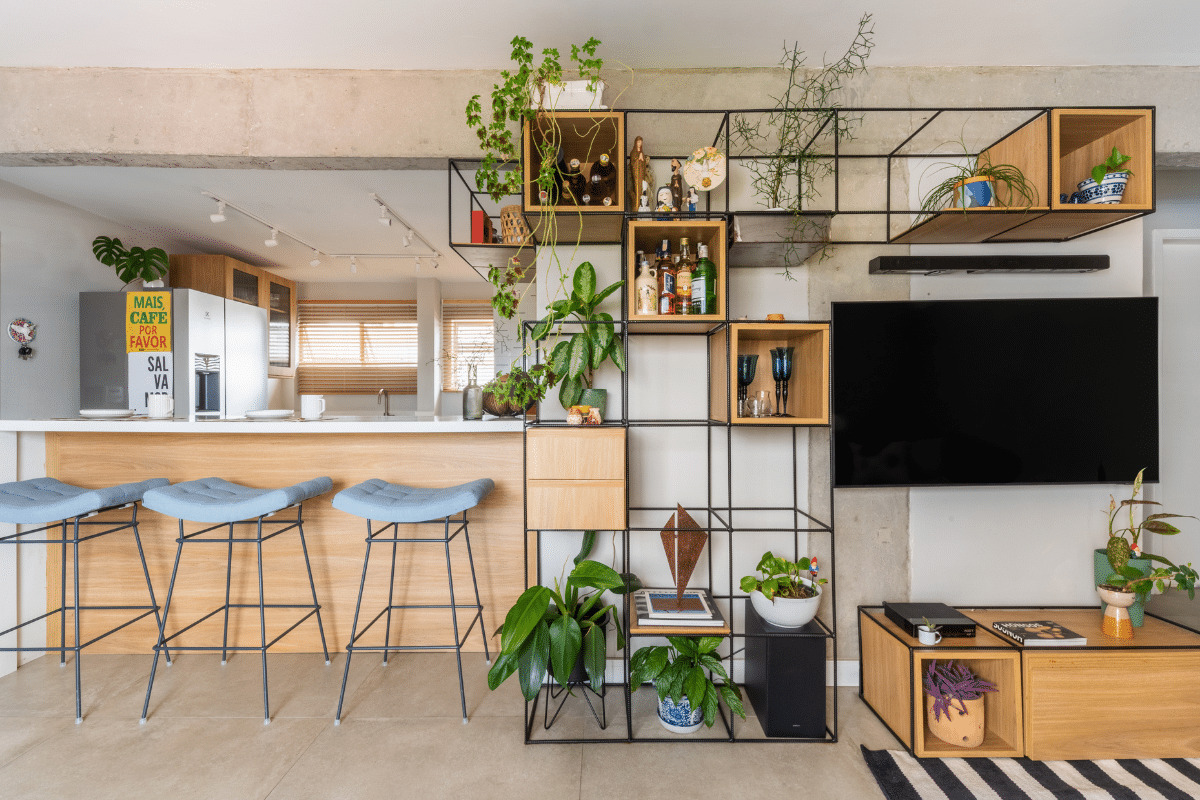
See how some changes and adaptations can be made to make your home more comfortable and functional
EdiCase Editorial
Owning your own home is one of the main goals of many people, as it represents security and independence, as well as symbolizing the beginning of a new phase. When receiving the keys to the new property, an equally important stage begins: transforming the space into a functional, comfortable home that reflects the personality of the residents.
To make this process simpler, architect Bruno Moraes, from Studio BMA, put together some tips to help with the planning and organization of each space. Check it out!
1. Prioritize versatile and functional furniture
Often, in the excitement of tidying everything up, residents forget that, in the course of their daily lives, a series of new needs may appear. “The tip is to think about furniture that adapt to these changes”, says Bruno Moraes.
2. Take advantage of natural lighting and ventilation
Before furnishing the apartment, it is important to analyze how everything will be arranged in relation to the windows and balconies. The ideal is to leave the cabinets close, preferably facing them, to ventilate and prevent humidity.
3. Plan each space in the property
Furniture and environments Multifunctionals are excellent options for those who are going to live in small apartments. Investing in pieces that perform more than one function helps to make the routine more practical and contributes to a more organized and comfortable property.
4. Invest in versatile light points
Most of the time, people decorate their first apartment little by little. Therefore, a tip is to opt for luminaires that allow you to change the direction of the light and add new lighting points, such as rails with spotlights. These models can be adapted according to changes in the layout of the environment.
5. Make a list of what you have
It is important to list your personal belongings and check if they fit in the space. It helps to think about how you will store them and plan the cabinets. “Before renovating my apartment, the kitchen and laundry room were the same size. We chose to reduce the laundry area in order to enlarge the countertop and have extra drawers in the kitchen”, says architect Bruno Moraes.
6. Bet on the use of cobogós
The hollow covering is a charming option for delimiting environments, without visually blocking them (making it possible to return to the layout original whenever you want). Depending on the model, cobogó can be a more practical and faster alternative than building a wall, as some already come with a finish.
7. Pay attention when choosing flooring
Another interesting tip is regarding the floors: if it is a small property, it is possible to use the same floor in the apartment whole. This solution contributes to the feeling of spaciousness and visual unity.
What to look for before buying your apartment
When choosing a property, it is important to check some points to ensure that the space meets your needs and expectations. They are:
1. Observe the solar position of the property
Pay attention to whether the apartment is on the north or south side of the building. If you go to the north, for example, there will be sun in the apartment all day long. If you go south, then you almost won’t go beat the sun. This completely influences the layout of the project.
2. Understand the limitations of the building’s structure
Another important aspect is to see the construction model of the building. If the majority of the walls are made of structural masonry, it is not possible to make many changes.
3. Pay attention to taps, showers and drains
Bruno Moraes suggests some tricks to check if the hydraulics are adequate: the first is to take a bucket of water and throw it into the drains to check the inclination given by the construction company. You should also open taps and showers and let the water run. If there are any leaks in the siphons, they will appear after about 2 or 3 minutes.
4. Check the electricity outlets
To carry out an electrical inspection, Bruno Moraes recommends another simple trick: “You just need to take your cell phone and charger to test in all the sockets”, concludes the architect.
By Emilie Guimarães