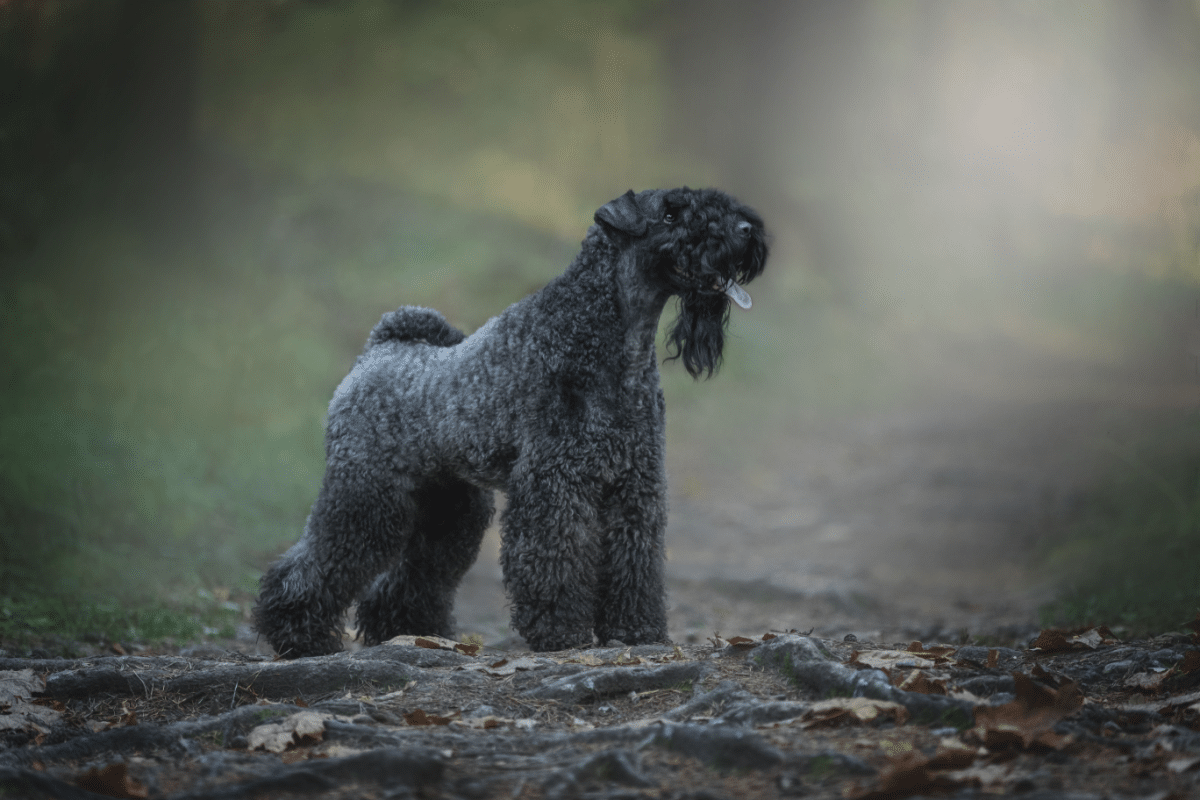
With a hunting background and a striking look, this Irish terrier combines energy, intelligence and a bluish coat that attracts attention.
EdiCase Editorial
Originally from Ireland, the Kerry Blue Terrier is an ancient breed linked to working in the field. According to the official standard of the Brazilian Cinophilia Confederation (CBKC), it was used to hunt otters in deep waters, face badgers in burrows and even chase predatory animals, in addition to acting as a guard dog.
The CBKC standard highlights that the kerry blue has long been associated with Ireland and that one of the first known descriptions of a dog with this profile appeared in 1847, when an animal with a slate blue color was mentioned, with darker markings and, sometimes, brown tones on parts of the body.
Despite its humble origins as a hunter and farm dog, the Kerry Blue Terrier gained prominence in the 20th century and became known in different parts of the world for its combination of courage, elegance and versatility. Below, check out the main characteristics of this breed!
1. Physical appearance
The Kerry Blue Terrier is a medium sized dogathletic in appearance and very well proportioned. According to CBKC, this is an active, muscular terrier with a balanced body. Males usually measure between 45.5 and 49.5 cm at the withers, while females measure between 44.5 and 48 cm. The weight of males varies from 15 to 18 kg, with females being proportionally lighter.
One of the most striking features of the breed is its coat. According to the official standard, the fur must be soft, abundant and wavy, and the characteristic color is blue in different shades, with or without black tips. The head has a thick coat, the eyes are brown or dark brown and convey an attentive expression, while the ears are thin, short and pointed forward, reinforcing the terrier’s typical vigilant look.
2. Temperament and personality
The Kerry Blue Terrier is usually an attentive, courageous and full of disposition. According to CBKC, he has the typical temperament of terriers, with a stern and alert expression as one of his main hallmarks. This indicates an observant animal, which is always keeping an eye on the surrounding environment and tends to react quickly to everyday stimuli.
Furthermore, it is a breed that tends to create a strong bond with its family and can be very loyal to its owner. At the same time, the working and hunting history shows that the Kerry Blue Terrier is not a passive dog: he has initiative, energy and a firm personality. Therefore, they generally do better in homes that can offer routine, interaction and activities. Its protective side can also appear, as CBKC itself describes the breed as a good guard dog.
As an active and muscular dog, the Kerry Blue Terrier needs a good quality foodsuitable for size, age and level of physical activity. The ideal is to have your veterinarian’s guidance to define the amount of food and the most appropriate type of diet, avoiding excesses that favor weight gain and nutritional deficiencies.
Coat care deserves special attention. As the coat is abundant, soft and wavy, frequent brushing helps to avoid knots and maintain the breed’s characteristic appearance. In general health, the basic care recommended for any dog is valid: regular veterinary appointments, up-to-date vaccinations, parasite control and attention to oral health.
Kerry blue terrier education should begin early. Because he is intelligent, active and has a typical terrier temperament, he tends to respond better to a consistent routine, with clear and clear commands. mental stimuli. Teaching rules from a young age, rewarding desired behaviors and maintaining a predictable coexistence usually helps a lot in the dog’s development.
Socialization is also an important point. Exposing the puppy gradually and positively to people, sounds, environments and other animals helps him grow more balanced and confident. As the breed has a history of hunting and guarding, this process is even more relevant to channeling its energy appropriately.