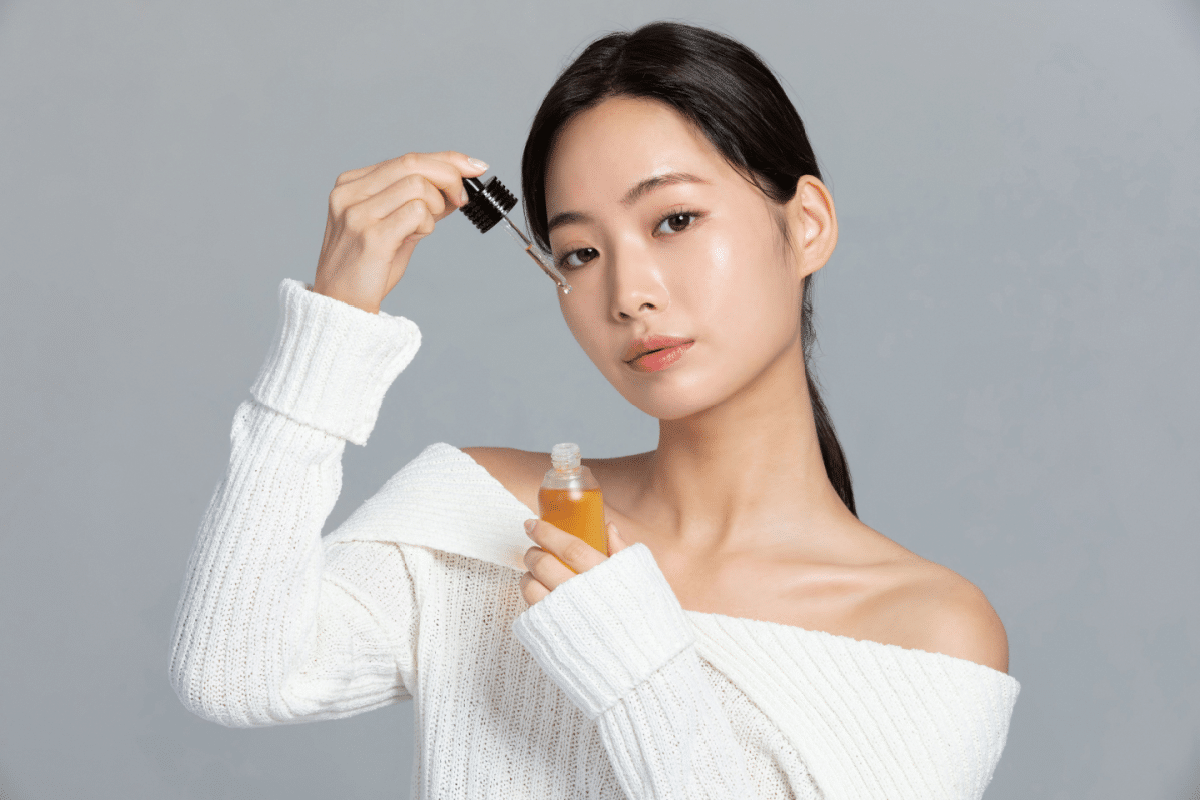
Biotechnology, new ingredients and increasingly sophisticated formulations help explain why South Korea continues to influence the global skincare market
EdiCase Editorial
The Korean beauty became known around the world for her elaborate routines. skincarefor creative packaging and the ability to transform novelties into consumer desire. Today, however, its main difference is less in aesthetics and more in science. Behind the products that hit the shelves, there is an industry that continually invests in research, development and innovation applied to skin care.
The numbers help to measure this progress. In 2025, South Korea exported US$11.4 billion in cosmetics, a result 12.3% higher than that recorded in the previous year. According to the country’s Ministry of Food and Drug Safety, the performance placed the South Korean industry in second place among the world’s largest cosmetics exporters, behind only France.
New active ingredients raise the standard of South Korean cosmetics
Much of what is beginning to gain space in the Brazilian market is already part of the company’s routine. South Korean industry a few years ago. Ingredients such as PDRN (polydeoxyribonucleotide, a biotechnological active extracted from salmon DNA), biomimetic peptides and fermented active ingredients are some examples of this new generation of skincarewhich combines biotechnology, scientific research and increasingly sophisticated formulations.
Also highlighted are the so-called spicules, microstructures present in certain formulations developed to favor the application and distribution of ingredients on the skin. Technology has attracted attention for bringing the skincare of solutions inspired by dermatological procedures, even though cosmetics and treatments have different functions.
“The Korean industry does not launch an ingredient in isolation. There is work to understand how it behaves alongside other active ingredients, in different textures and types of product. It is this ability to transform research into accessible innovation that keeps South Korea at the forefront”, says Jimmy Lee, director of KS Cosméticos, a Brazilian distributor specializing in K-Beauty products.
O skincare moves towards more conscious care
This evolution also accompanies a change in consumer behavior. The search for immediate results has been giving way to continuous skin care, with greater pay attention to hydrationstrengthening the skin barrier and the composition of the products. Increasingly, consumers want to understand what they are using, what a certain ingredient is for and how it can be incorporated into their routine.
According to Jimmy Lee, part of this speed is linked to the structure of the South Korean market itself, which brings laboratories, manufacturers and brands together in an ecosystem capable of accelerating the development of new technologies. “When a technology starts to appear strongly in other markets, it has often already been worked on in Korea for some time. There is a great capacity to transform scientific knowledge into safe, effective and accessible products for the consumer”, he explains.
Regulation ensures consumer safety
If developing a new technology requires research, putting it on the market also depends on another factor: complying with the regulatory requirements of each country. In Brazil, cosmetics Imported products must follow the standards established by the National Health Surveillance Agency (Anvisa) before being sold.
“It is not always possible for a product that goes viral abroad to be sold immediately in Brazil. There is a lot of work involved in regulatory adaptation and technical monitoring so that it reaches the Brazilian consumer within the standards required by legislation”, adds Jimmy Lee.
By Clarissa Perillo