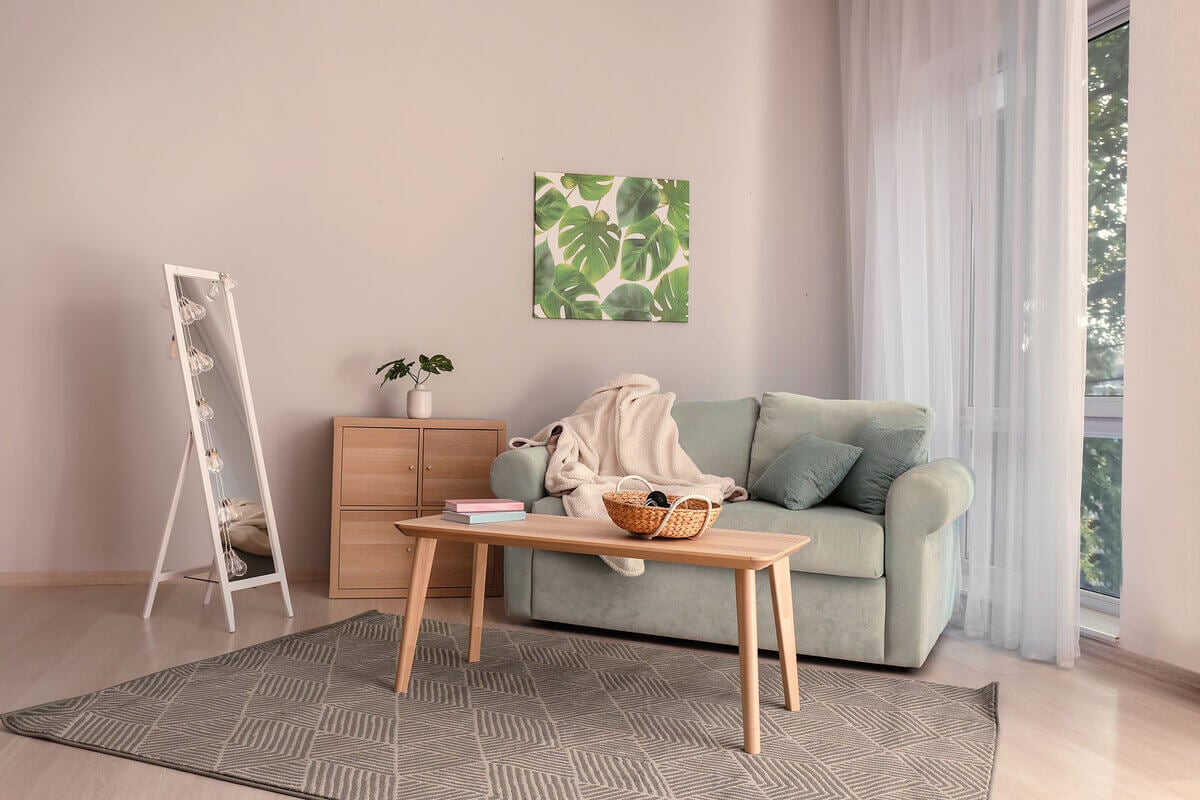
The Scandinavian decoration emerged in northern Europe, more specifically in the Scandinavian region, and had its peak in the 1950s. Therefore, it brings the characteristics of this region. “It is inspired by Nordic elements and local landscapes. Many elements that belong to this style are linked to the rigorous cold and the darker winter lighting,” explains interior designer Larissa Santo.
The Scandinavian style brings in its origin the idea of comfort, warmth and minimalism. According to the interior designer, he aims to give more clarity to the environment, as winter days are short and dark. Functional elements, such as warmer and blanket rugs, help to compose the space.
Below, check out some tips for applying the Scandinavian style to the decoration!
1. Importance of colors
Colors are very striking and make a difference in this type of decoration. In it, light, pastel and natural tones predominate, which contrast with white. “There may also be some more vibrant color, in a few prominent objects and complements, one of the characteristics of minimalism, which represents the concept of Scandinavian. Simple forms and straight lines stand out in these environments,” explains architect and urbanist Juliana Cararo.
2. Balance when composing the decoration
According to interior designer Larissa Santo, decorative elements help bring more heat to environments, as Scandinavian style is marked by neutral colors. “On the couch, there can be no shortage of blankets and cushions, and do not forget that beautiful rug. If you decide to put pictures, remember: very minimalist, a sentence or just a drawing,” he adds. This type of decoration allows you to abuse in white, gray, pastels and straight lines. If you use curtains, prefer those that allow light to enter the environment.
3. Accessories that value style Scandinavian
Larissa Santo points out that the Scandinavian decoration welcomes with harmony accessories with straight lines that bring color pigments. “For example, a ceramic vase joins the natural element and heat for this object, thus valuing the environment,” he says. If you want to maintain the characteristics of this style, the ideal is always to bet on simple, functional accessories that leave the environment illuminated.
4. Plants give life and color to environments
According to the interior designer, plants also value Scandinavian decoration, especially those that can be hung on the walls. “Try to use more green plants, such as boa jib. As pending, it can be used on high shelves or shelves,” he recommends.
5. Bet on color points
As Scandinavian style is minimalist, Larissa Santo suggests that it starts thinking precisely about this concept. “Then, bet on more neutral colors and invest in color points, ”says the interior designer.
The Scandinavian decoration is cleanmaking it easier for those who are afraid of making mistakes. “Start by combining white, gray and wood. Another tip is to put color only on elements that you will make it easy to change later. The best Scandinavian environments are those that have the most empty spaces,” jokes Larissa Santo.
6. Use of natural elements
Architect Juliana Cararo explains that wood is always present in the Scandinavian decoration. “Usually in furniture, objects and floor. Preferably, natural or that brings characteristics very close to the real. Elements in black iron, or copper, are very characteristic in these spaces. Fabric blankets, knitting or loom and skin in pillows, or partially covering an armchair or sofa, is also recurrent in these spaces. Natural fibers, ”he says.
7. Walls and ceilings
In this style, the walls and the ceilings are usually white or in very clear tones. “To the lamps and the objects fixed on the walls decorate ceilings and walls. The characteristics of the space can be preserved, for example, a natural wood wall, a brick wall in sight or concrete, gross ceiling or even peeling a wall, which is known to be of ceramic or concrete blocks, can grant a very interesting space, ”explains Juliana Cararo.
She points out that Scandinavian environments are always clear. “Sometimes it can even paint walls to the natural, more rustic with clear shades. Apparent pipes and installations also bring a very original characteristic to the space, facilitating and minimizing costs of clippings and plaster on the walls and the need for lining in the environments,” concludes the professional.