The street race has gain more and more space among Brazilians. Proof of this is that, according to an Olympikus survey in partnership with Box 1824, more than 13 million people have already incorporated the practice into routine – especially young adults and those looking for more physical and mental health. With this growth, there is also the need to adopt care that guarantee the safe practice of the activity.
One of the most important points in this process, however, is still often neglected: the muscle strengthening. And that is precisely where the danger lives. Ignoring this step can result in serious consequences, such as falling performance and increased risk of injuries that could be easily avoided with proper preparation.
“Many runners focus only on running training, but strengthening exercises are essential to increasing muscle strength and body stability. They are important because stronger muscles help support the impact during the race, improving performance and reducing the risk of injury,” explains Raquel Silvério, physiotherapist, the Institute’s clinical director deals with guarulhos and lower limb expert.
Risks of the lack of strengthening
According to Raquel Silvério, the absence of adequate strengthening exercises can cause muscle tensions, especially in calves, later thigh and hip, reducing joint mobility – which impairs the posture and gesture of race – risk of repetitive effort injuries such as tendonitis, plantar fasciitis and iliotibial band syndrome, as well as slower recovery after training, with greater training, with greater training Accumulation of lactic acid and muscle aches.
“The body needs preparation to run and care after running, otherwise Chances of injuries increase; And stretching and exercises fulfills this role before and after training, helping the body to adapt better to the impact of the activity, ”says the physiotherapist.
Strengthening Exercises for Runners
To help the runners on duty, Raquel Silvério highlights the 5 main strengthening exercises. Check it out!
1. Front Pracha
The board strengthens the core region, essential to maintain the correct posture during running and avoid back and hips pain. To perform, the body must be aligned and the abdominals contracted for 30 seconds, gradually increasing the time according to progress.
The squat strengthens legs, hips and buttocks, fundamental muscles for the propulsion in race. When descending, it is necessary to take care that the knees do not exceed the line of the feet, and the trunk should be kept erect.
3. Advance (lunge)
The advance works the legs and improves stability, helping to control posture during the race. One step forward should be taken to the knee of the back leg almost touch the floor, and return to the starting position.
4. Glute bridge
This exercise Strengthens the buttocks and the lumbar region, besides improving hip stability, fundamental for runners. The execution consists of lying on your back with your knees flexed, lifting your hip until it forms a straight line of your shoulders to your knees.
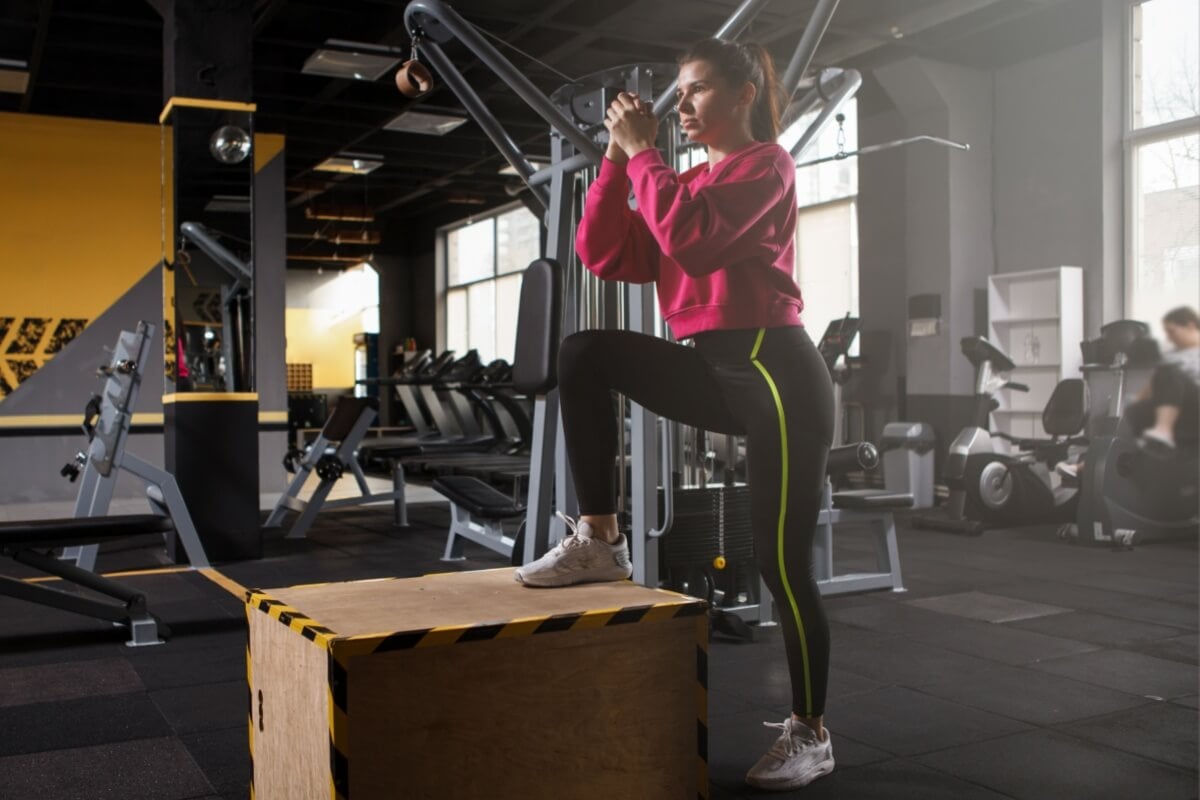
5. Step-up
Climbing a bench or cashier with one leg at a time simulates the running movement of the race, strengthening the thighs and buttocks. The height of the platform can be increased according to muscle strengthening.
Consult an expert
Raquel Silvério stresses that, with the growth of running groups and the popularization of training applications, access to sport It became more democratic – but this should not replace professional guidance. “Listening to the body, respecting its limits and including the exercises in the routine is what allows the corridor to evolve safely and longevity,” concludes the physiotherapist.
By Giovanna Almeida