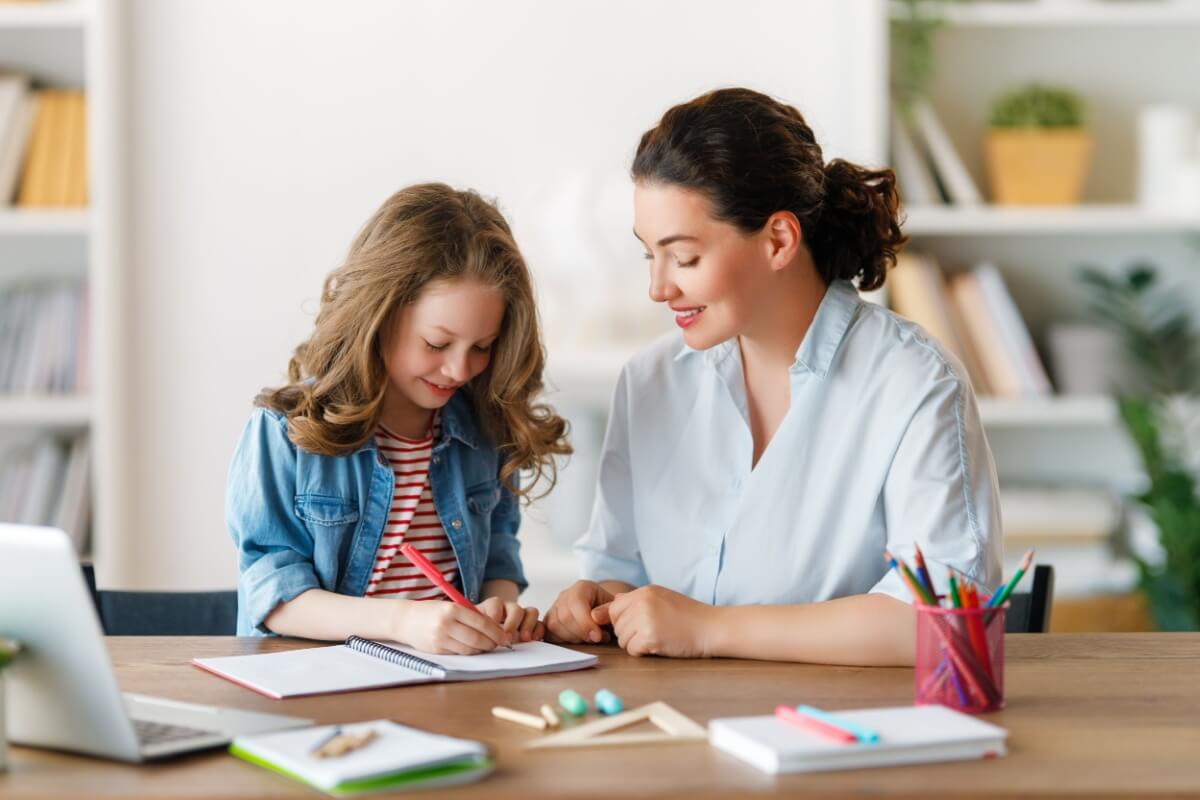
Expert explains how family support can stimulate autonomy and development without harm
The homework routine is often one of the most stressful moments for many families. Between the rush of everyday life, the child’s difficulty with certain content and the anxiety of those responsible to ensure that everything is delivered correctly, it is common for the help to end up turning into the adult carrying out the activity.
Although the intention is to facilitate the process, taking on the task can compromise the development of autonomy, responsibility and the development of the child’s reasoning. According to Camila Santiago dos Santos, professor of the Pedagogy course at Unopar, family support is important, but it needs to happen strategically.
“Homework is not just about reviewing content. It also encourages organizationautonomy, ability to solve problems and confidence in one’s own learning”, she explains. According to the expert, when the adult provides ready-made answers or carries out the activity in the child’s place, they end up interfering in this process. “The role of the family is to mediate, guide and offer emotional support, not to replace the effort necessary for learning”, she reinforces.
Supporting the child with homework
Below, the Unopar teacher highlights some strategies to support children in a healthy way with homework:
- Create a predictable routine: setting a suitable time and place for studying helps the child understand the task as a natural part of the daily organization;
- Offer support, not ready-made answers: instead of solving the activity, ask questions that stimulate reflection and reasoning;
- Help with organizing the task: guiding the reading of the statement, dividing steps and planning time are efficient forms of support;
- Respect the child’s time: Each student has their own rhythm of learning. Haste can increase insecurity and frustration;
- Value effort and progress: recognizing dedication and progress strengthens academic self-esteem.
You need to watch for persistent signs of difficulty
Another important point, according to Camila Santiago dos Santos, is to observe persistent signs of difficulty. Frequent resistance, excessive anxiety, difficulty concentrating or recurring suffering when faced with tasks may indicate the need for dialogue with the school.
For the Unopar teacher, homework should be seen as an opportunity for development, and not as a reason for family conflict. “When the family offers support with listening, encouragement and adequate mediation, the child develops autonomy and learns to trust more in their own abilities”, he explains.
Errors are part of the pedagogical process
Errors are also part of the pedagogical process. “A mistake is a learning opportunity. When the child realizes where they made a mistake and retraces their path, they build knowledge in a much more consistent way”, highlights Camila Santiago dos Santos.
By Letícia Zuim Gonzalez