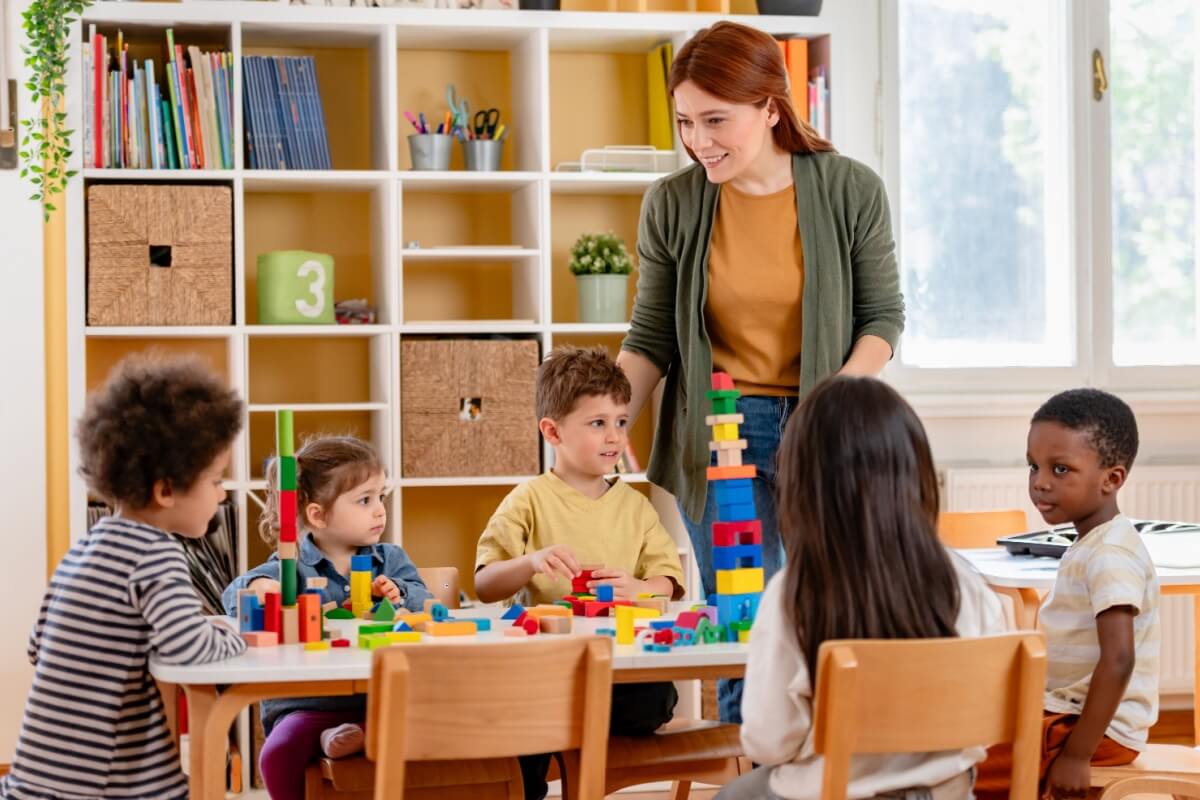
Play contributes to the emotional, social, cognitive and neurological development of children
EdiCase Editorial
In a routine increasingly marked by excessive screens, digital stimuli and commitments, preserving play space in childhood becomes difficult, but necessary. Data from the United Nations Children’s Fund (UNICEF) shows that just 15 minutes of daily interaction and play with babies is capable of stimulating millions of brain connections, which are fundamental for children’s cognitive, emotional and social development.
Activities such as running, drawing, assembling toys, playing pretend, participating in group games or even transforming simple everyday tasks into playful moments help in the development of creativity, autonomy, memory, language, concentration and ability to solve problems, with positive impacts that can be reflected into adult life.
Dr. Mariana Ramos, Psychology professor at Afya Centro Universitário Itaperuna, explains that playing is one of the main forms of learning and communication in childhood. “It is through play that child learns to recognize emotions, deal with frustrations, wait, negotiate rules, develop empathy and build a sense of emotional security. While playing, she experiences the world, tests possibilities, rehearses social roles and learns, in a symbolic way, to organize her internal and external experiences”, he states.
Impacts on emotional and brain development
According to Dr. Mariana Ramos, children are often able to express feelings in play that they cannot yet verbalize. “The child develops fears, insecurities, conflicts, anxieties and everyday experiences through make-believe, games and symbolic play. Therefore, playing has an extremely important therapeutic function in child development”, he adds.
In addition to the emotional aspect, playing is also directly linked to brain development. Dr. Isabela Pires, doctor and postgraduate professor in Pediatrics at Afya Brasília, highlights that playful activities stimulate important neural connections from the first years of life.
“Playing stimulates brain connections that are important for learning, memory, language and problem solving. Children who play healthily tend to develop more emotional autonomy, creativity and better social skills throughout their lives”, he explains.
Doctors also draw attention to the positive impacts of playing on children’s mental health. Children who have healthy spaces to play tend to have less anxiety, greater emotional security and stronger emotional bonds.
“When children play freely, they exercise imagination, creativity, cognitive flexibility, autonomy and problem solving. This strengthens family bonds and promotes an emotionally healthier childhood”, highlights Dr. Mariana Ramos.
Another point of attention highlighted by experts is excessive screen time in childhood. Although technology is part of today’s reality and is present even in school environmentexcessive use can reduce important moments of social interaction, creativity and movement.
“Children under the age of two should not have access to a cell phone. During this period, they need to create brain connections through human interactions, games and contact with the environment. The child does not need to be entertained all the time. Leisure also stimulates creativity, autonomy and emotional development”, warns Dr. Isabela Pires.
For the pediatrician, balance is the main path. According to her, technology is part of today’s life, but it is essential to preserve moments of coexistence, face-to-face games, movement and family interaction.
Benefits of playing in childhood
Below, experts highlight the benefits of playing in childhood that are reflected in adulthood. Check it out!
1. Greater emotional intelligence
Children who play learn from an early age to dealing with frustrations, losses, rules and conflictswhich contributes to more emotionally balanced adults with a greater ability to face challenges.
2. Better social and communication skills
Group games help develop empathy, cooperation and dialogue skills, fundamental skills for personal and professional relationships in adult life.
3. More creativity and problem-solving skills
Pretend play, games and recreational activities stimulate imagination, reasoning and adaptation, encouraging more creative, innovative and flexible adults when faced with difficulties.
4. Reducing anxiety and strengthening mental health
A childhood with space to play contributes to the development of emotional security, self-esteem and a sense of belonging, factors that help build emotionally healthier adults.
5. Development of autonomy and cognitive functions
Simple everyday games, such as playing house, organizing objects, counting pieces or participating in small household tasks in a playful way, help to develop memory, language, attention, logical reasoning and executive functions. These experiences contribute to the formation of more independent adults, organized and prepared to deal with everyday responsibilities and challenges.
6. Stimulation of neuroplasticity and adaptability
Playing also promotes neuroplasticity, the brain’s ability to create and reorganize neural connections throughout life. During childhood, a phase in which the brain is undergoing intense development, healthy stimuli such as play, social interaction and safe environments strengthen skills linked to learning, adaptation and recovery in the face of future difficulties, contributing to more resilient adults with a greater capacity for continuous learning.
By Beatriz Felicio