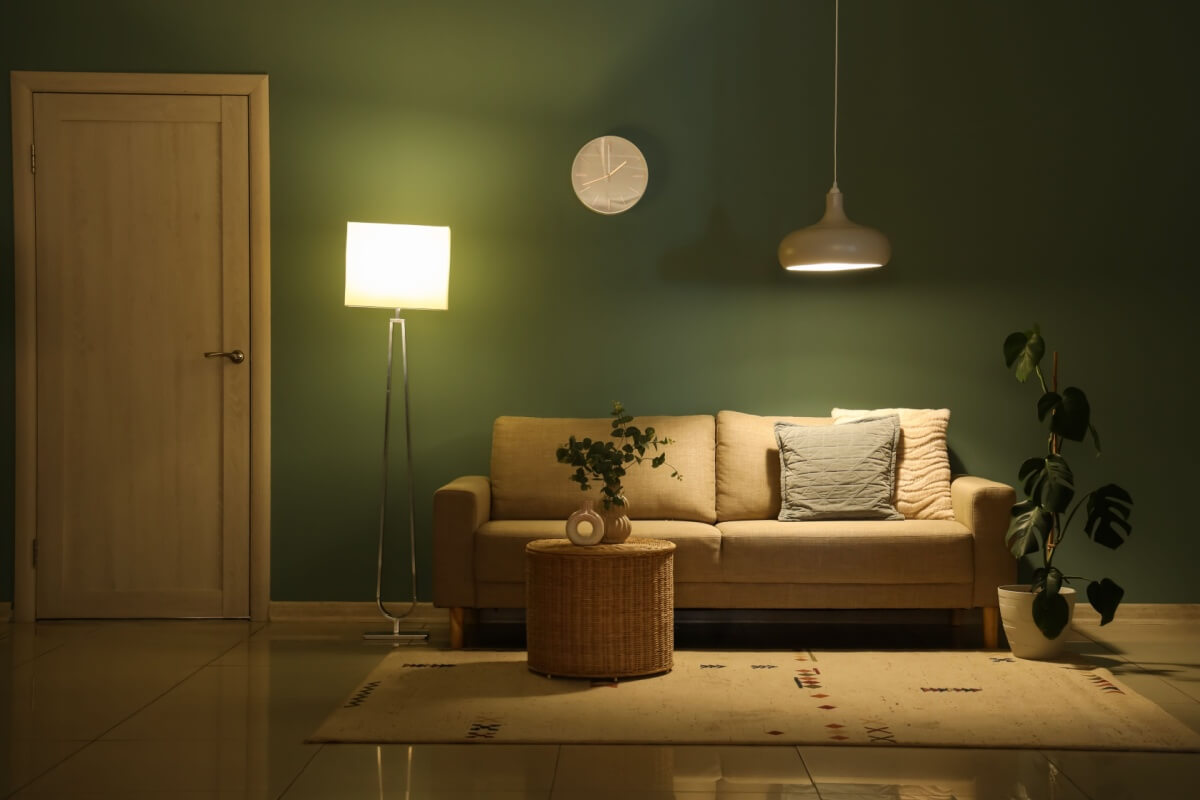
The choice of light can impact well-being, sleep and even productivity in everyday life
Home lighting can directly influence mood and even sleep quality. More than an aesthetic issue, choosing the amount and type of light for each activity helps to create more comfortable and functional spaces.
According to Vania Mastrorocco Brand, architect and professor of Architecture and Urbanism at Faculdade Anhanguera, a good lighting project completely transforms the environment. A balanced proposal must offer aesthetic effect, comfort, functionality and sustainability.
To achieve this balance, check out some tips below!
1. Combine layers of light
Don’t depend on just one central lamp in the room. A good project works with the overlapping of different points of light, in addition to the lighting main, such as LED panels or light strips.
Consider task lighting focused on specific areas: working, reading, or food preparation, such as LED strips under the kitchen cabinet or a desk lamp. Another option is accent lighting, which serves to enhance textures, paintings or decorative objects, such as in directional spots.
2. Choose the right color temperature for each function
The color temperature (measured in Kelvin) dictates the mood of the space. Remember: warm (yellow) lights relax and cold lights stimulate. Therefore, color temperature brings sensations for the environment. Here’s how to choose the ideal one:
- Warm (2700K to 3000K): can be used in living rooms, bedrooms and rest areas, as it brings coziness;
- Neutral (4000K): excellent for offices, bathrooms and kitchens, keeping the environment bright without tiring the eyes;
- Cold (above 5000K): restricted to operational areas (such as laundry rooms), as it can leave the residential environment with an impersonal appearance.
3. Value natural light
Artificial lighting should complement sunlight, never compete with it. The importance of the project is to observe where daylight enters through windows and doors before positioning the furniture. In addition to saving energynatural light regulates our biological clock, improving mood and well-being throughout the day.
4. Pay attention to the Color Rendering Index (CRI)
The choice of lamps is very important. The Color Rendering Index (CRI) measures how faithfully the artificial lamp replicates the real colors of objects in sunlight, which has CRI 100.
“For areas with a mirror, such as those in the bathroom, where a person can put on makeup or shave, wardrobe and kitchen countertop, always choose lamps with a CRI above 80 or 90. Lamps with a low CRI can be used in bathrooms”, comments Vania Mastrorocco Brand.
5. Avoid visual glare
The light should illuminate the space, but the light source should not hurt your eyes. To avoid visual discomfort, choose luminaires with anti-glare recesses. Furthermore, avoid positioning spots directly above the area of use, such as on TV and computer screens, to avoid generating uncomfortable reflections. Prefer to use indirect light, reflected from the ceiling or wall, to create a soft and relaxing atmosphere.
6. Divide the electrical circuit into zones
For flexibility, you need to control the lights independently. Instead of turning everything on with a single switch, separate the general lighting from the accent spots and decorative LED strips. This allows you to create different scenarios and still invest in dimmers (regulators of intensity) or smart bulbs that control the brightness of the light and bring more personality.
By Priscila Dezidério