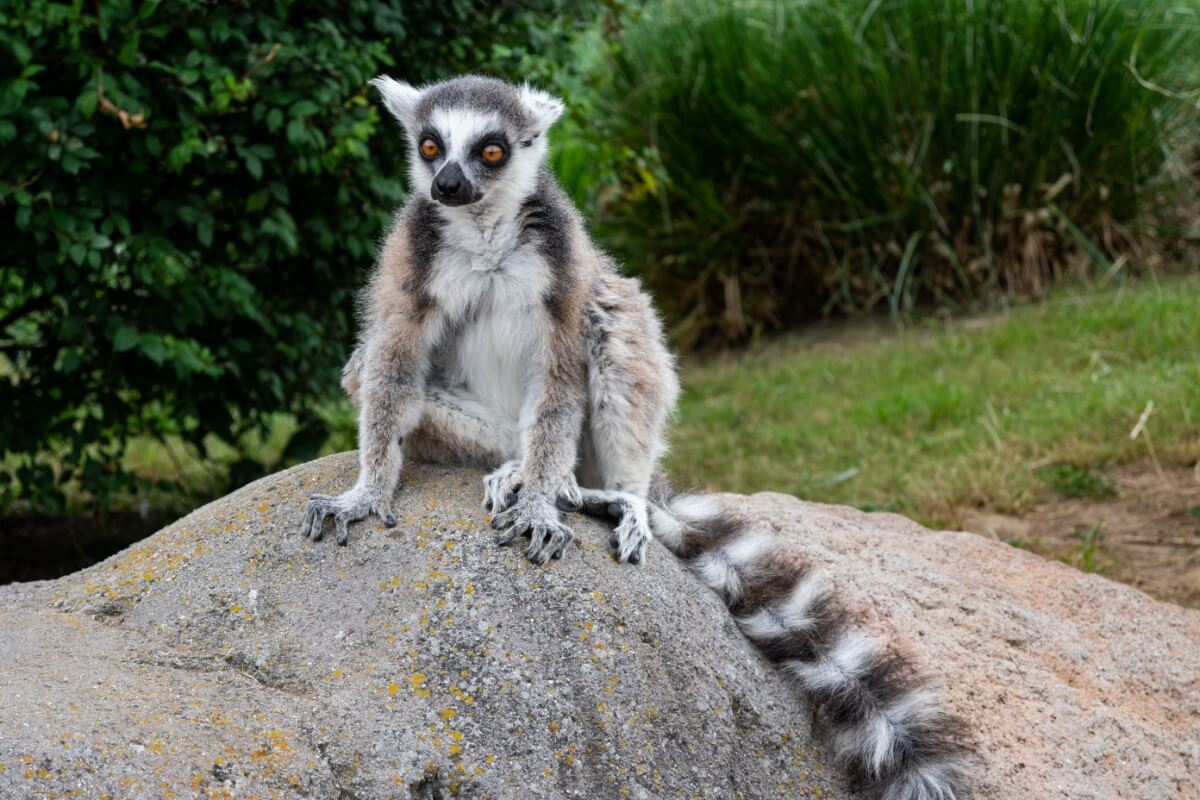
This animal full of personality draws attention for its curious habits, its different communication and its strong connection with the forests.
EdiCase Editorial
Lemurs are primate mammals native to the island of Madagascar, located on the African continent. They belong to the strepsirrhine group, considered one of the oldest primates on the planet. With big eyes, long tails and very peculiar behaviors, these animals have aroused the curiosity of scientists and nature lovers for decades. There are different species, each with specific physical characteristics and habits.
In addition to their ecological importance, lemurs have also gained worldwide fame on television. Many people got to know these animals through the children’s series “Zoboomafoo”, starring a ring-tailed lemur called Jovian, shown in 1999. The program won over children by presenting curiosities about animal life in a fun and educational way.
Since then, lemurs have attracted even more attention due to their different appearance, intelligence and very interesting social behavior. Below, check out some interesting facts about these primates!
1. Lemurs only live in Madagascar
One of the most impressive facts about lemurs is that they only live naturally in Madagascar and some small nearby islands. This means they are animals endemic to this region of the world. Scientists believe that lemur ancestors arrived on the island millions of years ago, likely crossing the ocean on floating logs. Because Madagascar was isolated for a long time, these primates evolved in unique ways.
2. There are over 100 different species
Lemurs are not all the same. In fact, there are more than 100 known species. Some are very small, like the mouse lemur, which can fit in the palm of your hand, while others have larger bodies and long tails. Each species has its own habits, and may be diurnal, nocturnal or even have activities at different times of the day. In addition, they also vary in their diet, coat color and form of social interaction.
3. The tail helps with communication
Lemurs’ long tails aren’t just for balance. In several species, it is also used as a form of communication. The ring-tailed lemur, for example, uses its movements to send signals to the group and demonstrate emotions. In some situations, the males have real “smell wars”rubbing odoriferous substances on its tail before waving it towards its rival.
4. Many lemurs are excellent jumpers
Lemurs have strong, muscular hind legs, characteristics that make them great jumpers. Some species can travel several meters in a single jump between tree branches. This ability is important for escaping predators, looking for food and moving around the dense forests of Madagascar. In terrestrial species, such as the ring-tailed lemur, jumping is also part of movement on the ground.
5. They have very organized social habits
Most lemurs live in organized social groups, called troops. These groups can vary greatly in size and often have complex social relationships. In many species, females occupy leadership positions, something relatively rare among primates. They usually decide feeding priorities and command the group in certain situations. Living in a group helps protect against predators and makes caring for the young easier.
6. Some lemurs hibernate
A surprising curiosity is that some species of lemurs are able to hibernate. The fat-tailed dwarf lemur is one of the few primates known to exhibit this behavior. During periods of food scarcity and lower temperatures, it drastically reduces its activities and metabolism. At this stage, the animal uses fat reserves stored mainly in the tail. Hibernation can last weeks or even months, depending on environmental conditions.
7. Diet varies greatly between species
Lemurs have very varied diets. Some feed mainly on fruits, while others prefer leaves, flowers, seeds, nectar or small insects. This helps reduce competition between species living in the same environment. Furthermore, many of them play an important role in seed dispersal, helping to regenerate Madagascar’s forests.