Discover surprising characteristics of these animals that live in extreme environments
EdiCase Editorial
Elk are among the most impressive mammals in the Northern Hemisphere. Belonging to the deer family, they live mainly in boreal forests and cold climate regions of North America, Europe and Asia. With long legs, an elongated snout and an imposing appearance, these animals are perfectly adapted to face harsh winters and travel through areas covered in snow.
In addition to their size, moose attract attention for a series of little-known behaviors and characteristics. Check it out below!
1. The moose is the largest deer in the world
Among all members of the deer family, the elk occupies the first place in size. An adult male can exceed two meters in height at the shoulders and weigh more than 700 kilos, depending on the population and the region where he lives. Its robust body and extremely long legs make it easy to move around in flooded areas, dense forests and terrain covered by deep snow. Furthermore, these characteristics make it one of the most respected herbivores in cold forests.
2. Only males develop large antlers
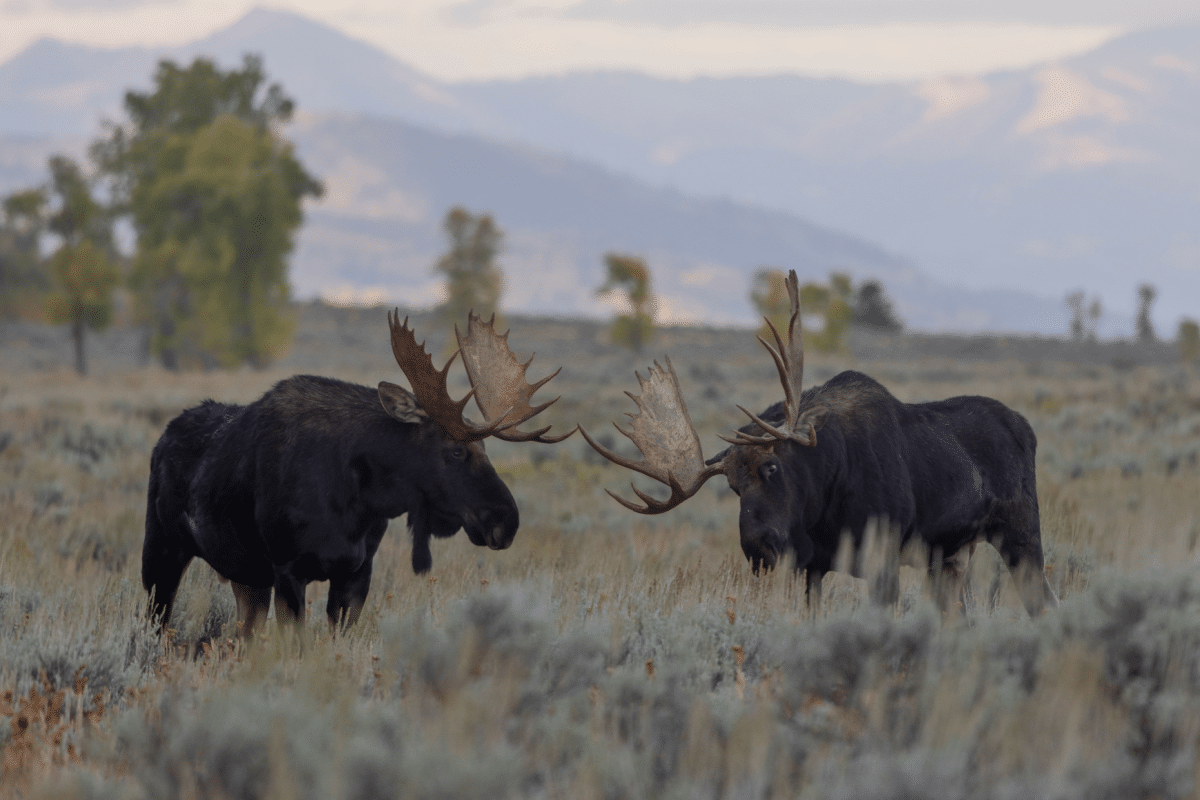
The huge antlers are one of the trademarks of elk, but they only appear on males. Every year, during spring and summer, a new antler grows rapidly, being covered by a layer known as velvet, rich in blood vessels that provide nutrients for its development. When the reproductive period arrives, this covering disappears, leaving the antlers hardened and ready to be used both in competition between males and in attracting females.
3. Antlers fall off and grow back every year
Unlike the permanent antlers found on other animals, elk antlers are temporary. After the end of the breeding season, the males they lose them naturally and begin a new growth cycle the following spring. This process requires a lot of energy and nutrients, and is considered one of the fastest examples of bone regeneration among mammals.
4. They are excellent swimmers
Despite their impressive size, moose swim very easily. They can cross large rivers and lakes and, in some cases, travel several kilometers in water. In addition to escaping predators, they use this ability to search for aquatic plants.
5. They like to eat aquatic plants
Although they are known to consume leaves, twigs, and tree shoots, elk also enjoy vegetation found in lakes and ponds. During the summer, they partially enter the water to reach plants rich in minerals, vitamins and other important nutrients for the body.
6. They prefer to live alone
Unlike many other deer, elk tend to lead a very solitary life. For most of the year, each individual occupies its own territory, meeting others only during the breeding season. The main exception is between females and their offspring, which remain together for about a year.
7. They can run very fast
Even though they appear to be slow due to their size, moose can reach speeds of over 50 km/h over short distances. This speed is essential to escape predators, such as wolves and bearsas well as allowing them to cross difficult terrain with ease. The long legs work like levers, providing long and efficient strides.
8. They are adapted to face intense cold
Elk have a thick coat of fur and thick skin, characteristics that help conserve body heat during the winter. In fact, they handle very low temperatures better than excessive heat. On hot days, they tend to seek shade or stay in lakes and rivers to reduce their body temperature.