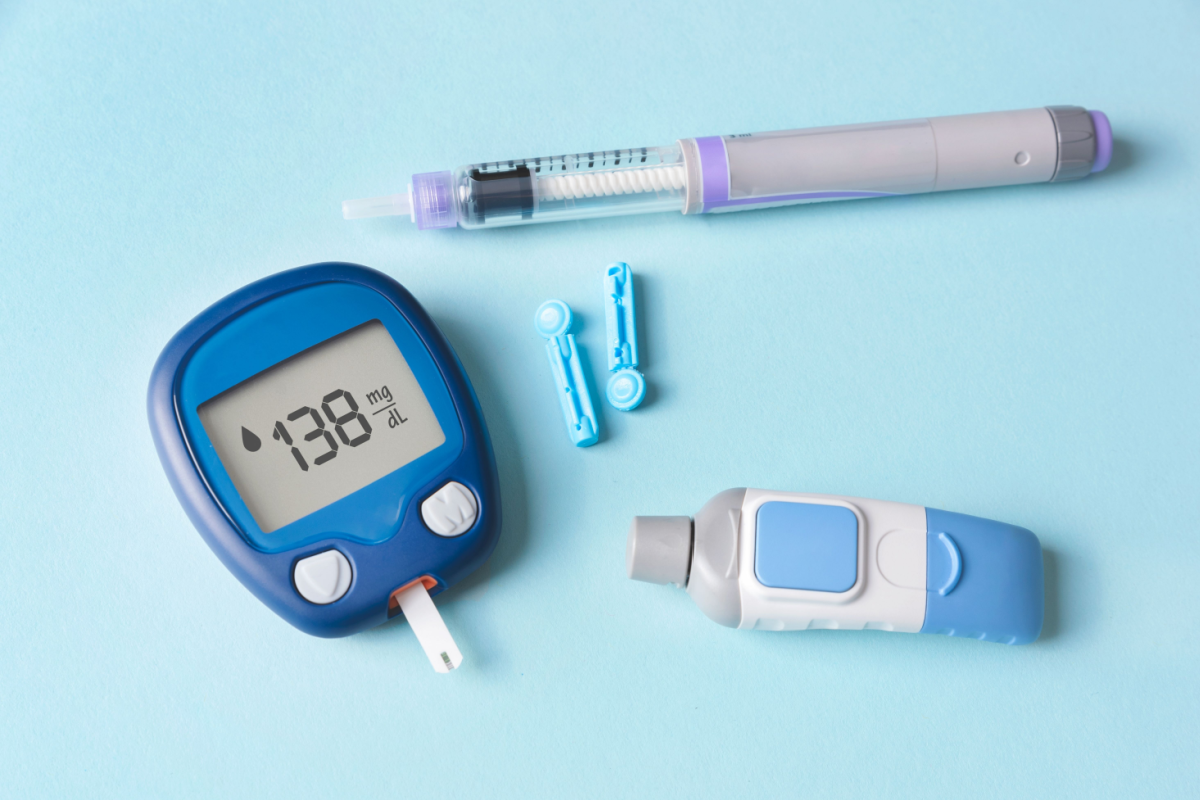
The condition is among the most common in the world and can evolve progressively, affecting different organs
EdiCase Editorial
Diabetes is among the fastest growing chronic diseases in Brazil, with an increase of 135% between 2006 and 2024 in the number of Brazilian adults with the condition, from 5.5% to 12.9%, according to the Ministry of Health. One of the main challenges of this reality is the fact that many people live with the disease without knowing it.
In Minas Gerais, for example, the impacts of diabetes are significant. Data from the State Department of Health (SES-MG) show that, in 2025 alone, more than 3.5 million admissions to health units related to diabetes and its complications, such as heart attack and kidney failure, were recorded. The volume of care is equivalent, on average, to one hospitalization every nine seconds.
According to Milena Fraga, general practitioner at AmorSaúde, a network of partner clinics of Cartão de Todos, the absence of symptoms It is precisely one of the main obstacles to diagnosis. “Diabetes is often called a ‘silent disease’ because, especially in type 2, high glucose levels can remain for years without causing noticeable symptoms. In some cases, the diagnosis only occurs when there are already associated complications”, he explains.
Types of diabetes
Although both cause an increase in blood glucose, the main types of diabetes have different causes. “In type 1 diabetes, the immune system attacks the pancreas cells responsible for producing insulin, making its use essential from the moment of diagnosis. In type 2 diabetes, the body continues to produce insulin, but it is unable to act properly, a situation known as insulin resistance”, explains the doctor.
See the differences between the types of diabetes:
- type 1 diabetes: usually diagnosed in childhood or adolescence, it is an autoimmune disease in which the body attacks the cells in the pancreas that produce insulin;
- type 2 diabetes: according to the Ministry of Health, 90% of diabetic patients in Brazil have this type, which is more common in adults, but with significant growth among young people. The characteristic is that the body becomes resistant to insulin and/or there is insufficient production;
- Gestational diabetes: occurs during pregnancy and normally disappears after birth, but increases the risk of mother and baby developing type 2 diabetes in the future;
- Pre-diabetes: When blood glucose levels are above normal, but have not yet reached the plateaus that characterize type 1 or type 2 diabetes, we have a condition known as prediabetes. This situation acts as a warning signal from the body and represents an important opportunity for early intervention.
Signs that should not be ignored
Although many people remain asymptomatic for a long period, some signs may indicate changes in blood glucose and deserve medical evaluation. The main symptoms include:
- Increased thirst;
- Increased urinary frequency;
- Excessive hunger;
- Weight loss without apparent cause;
- Persistent tiredness;
- Blurred vision;
- Recurrent infections;
- Difficulty in wound healing.
Risk factors for diabetes
Although anyone can develop the disease, some factors significantly increase the risk of diabetes. type 2. Among them are:
- Excess weight, especially in the abdominal region;
- Sedentary lifestyle;
- Family history of diabetes;
- Arterial hypertension;
- Changes in cholesterol and triglycerides;
- Smoking;
- Age over 35 years;
- History of pre-diabetes;
- Previous gestational diabetes;
- Polyendocrine Metabolic Ovarian Syndrome (formerly Polycystic Ovary Syndrome).
The importance of early diagnosis
According to Milena Fraga, as “diabetes can remain asymptomatic for many years, the diagnosis early allows treatment measures to be initiated before complications arise”, and routine examinations play a fundamental role.
The doctor explains that the diagnosis can be made using different tests, such as fasting blood glucose, glycated hemoglobin (HbA1c), oral glucose tolerance test or casual blood glucose in specific situations.
Currently, screening is recommended for adults aged 35 and over, especially in the presence of risk factors. When the results are within normal limits, reevaluation is usually recommended every three years, always in accordance with medical advice.
Complications of diabetes without adequate treatment
When left without diagnosis or adequate control, excess glucose in the blood causes progressive damage to different parts of the body. Among the main complications are:
- Impairment of vision, which can lead to blindness;
- Renal failure, with the possibility of needing dialysis;
- Nerve damage, causing pain, tingling or loss of sensation, especially in the feet;
- Increased risk of heart attack and stroke;
- Circulation problems in the legs;
- More frequent infections;
- Difficulty healing;
- Amputations in more serious cases.
“The most worrying thing is that many of these complications they begin to develop years before diagnosis, when the person does not yet show obvious symptoms”, warns the doctor.
Healthy habits help with prevention
According to Milena Fraga, although several factors influence the development of diabetes, taking care of certain habits continues to be one of the main forms of prevention. “The prevention of type 2 diabetes is directly related to the adoption of healthy habits. Maintaining an adequate weight, practicing physical activity regularly, not smoking and adopting a balanced diet are fundamental measures”, he states.
The doctor also recalls that “the World Health Organization (WHO) recommends between 150 and 300 minutes of moderate physical activity per week, in addition to performing muscle strengthening exercises at least twice a week”.
In addition to physical activity and weight control, food plays a decisive role in preventing type 2 diabetes. According to a study carried out by the Oswaldo Cruz Foundation (Fiocruz), 10% of deaths in Brazil in 2019 were directly related to the excessive consumption of ultra-processed foods, totaling 57 thousand deaths annually, which is equivalent to six deaths per hour or 156 per day.
Another survey, conducted by Fiocruz and the University of São Paulo (USP), estimated that this dietary pattern represents an annual impact of R$10.4 billion on the Brazilian economy and health services.
By Nayara Campos