Small in size, but gigantic in importance for the Atlantic Forest, it brings together curious habits and a story of survival that draws attention
EdiCase Editorial
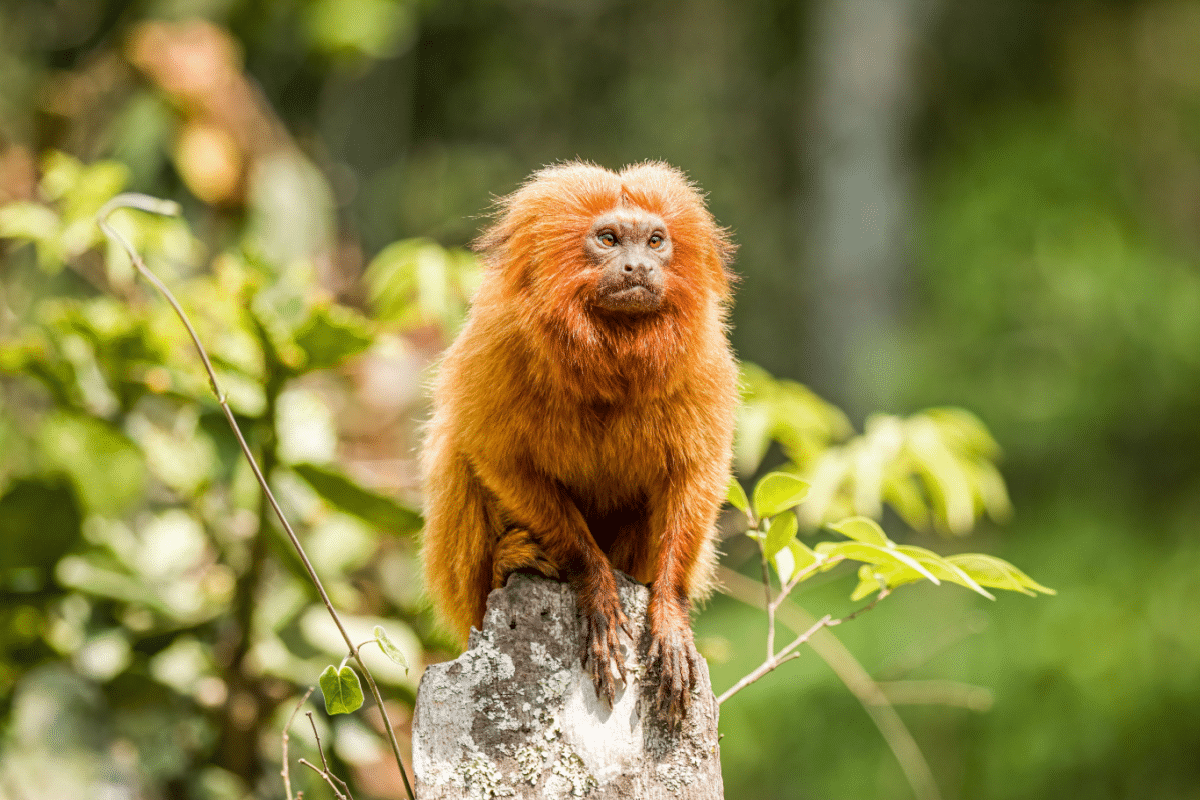
The golden lion tamarin is one of the most emblematic animals of the Brazilian fauna. Native to the Atlantic Forest, it attracts attention at first sight because of its long, shiny coat, in tones ranging from golden to reddish, in addition to its small, expressive face. Despite its delicate appearance, it is a very agile, intelligent primate adapted to life in trees, where it spends practically all its time in search of food, shelter and interaction with the group.
In addition to its beauty, the golden lion tamarin arouses interest due to its ecological importance and the conservation trajectory that involves the species. For decades, this small mammal suffered from deforestation and forest fragmentation, to the point of joining the list of endangered animals. Still, it became a symbol of the fight to preserve the Atlantic Forest and Brazilian biodiversity.
Below, check out some interesting facts about the golden lion tamarin!
1. The golden lion tamarin only exists in Brazil
One of the biggest curiosities about the golden lion tamarin is that it is a species endemic to Brazilthat is, it does not occur naturally in any other country. Its original habitat is linked to the Atlantic Forest of the state of Rio de Janeiro, especially in lowland forest areas.
2. The golden coat is a hallmark of the species
The name of the golden lion tamarin did not come about by chance. The species stands out for its golden or golden-red coat, which resembles a “mane”, especially around the face. This appearance explains the association with the figure of a miniature lion. The coloring helps to differentiate the animal from other Brazilian primates and makes it one of the most recognizable mammals in the national fauna.
3. He is small but extremely agile in trees
Although it is a small primate, the golden lion tamarin is a true expert at living in treetops. Its light body, long tail and adapted fingers allow for quick jumps and precise displacements between branches and trunks. This arboreal lifestyle is important because it reduces contact with terrestrial predators and increases access to food found in the forest.
4. The menu is varied and goes far beyond fruits
The golden lion tamarin doesn’t just feed on fruit. The species’ diet is much more diverse. It consumes fruits, insects, spiders, small lizards, eggs and other invertebrates and small vertebrates found in the forest. This varied diet guarantees different nutrients throughout the year, especially at times when certain foods become scarcer. When looking for food, the animal investigates tree bark, dry leaves, bromeliads and cavities.
5. It also helps to “plant” the forest
The golden lion tamarin has a very important ecological function: seed dispersal. To the eat fruitsit swallows seeds that are then eliminated in other parts of the forest, helping new plants to be born far from the original tree. This process contributes to the regeneration of the forest, the maintenance of plant diversity and the recovery of degraded areas.
This primate does not usually live alone. The golden lion tamarin forms family groups, with individuals that feed, move and rest together. Living in a group is advantageous because it increases vigilance against threats, facilitates the care of the young and improves the exploration of the territory. Among primates, cooperation is an important characteristic, and in the case of the golden lion tamarin this appears in contact behaviors, vocalization and collective protection.
Among the most interesting facts about the golden lion tamarin is the care it shares with its young. In many situations, the male actively participates in the transport of the young, carrying them on his back and handing them to the female when breastfeeding. This behavior reduces stress on the mother and increases the puppies’ chances of survival, especially in the first months of life, when they are most vulnerable.
8. He was once very close to disappearing
The golden lion tamarin is today a symbol of conservation precisely because its history was marked by a real risk of extinction. The destruction of the Atlantic Forest, human occupation, timber removal and forest fragmentation have drastically reduced the area available for the species.
With less habitat, the groups became isolated, with difficulty finding food, shelter and reproductive partners. This scenario caused the population to plummet over time and raised an alarm among researchers and conservation institutions.
Monitoring projects, forest area protection, habitat restoration and population management have helped improve the species’ prospects over the past few decades. The work around the golden lion tamarin also boosted the creation of ecological corridors and strengthened the discussion about the importance of preserving the Atlantic Forest.