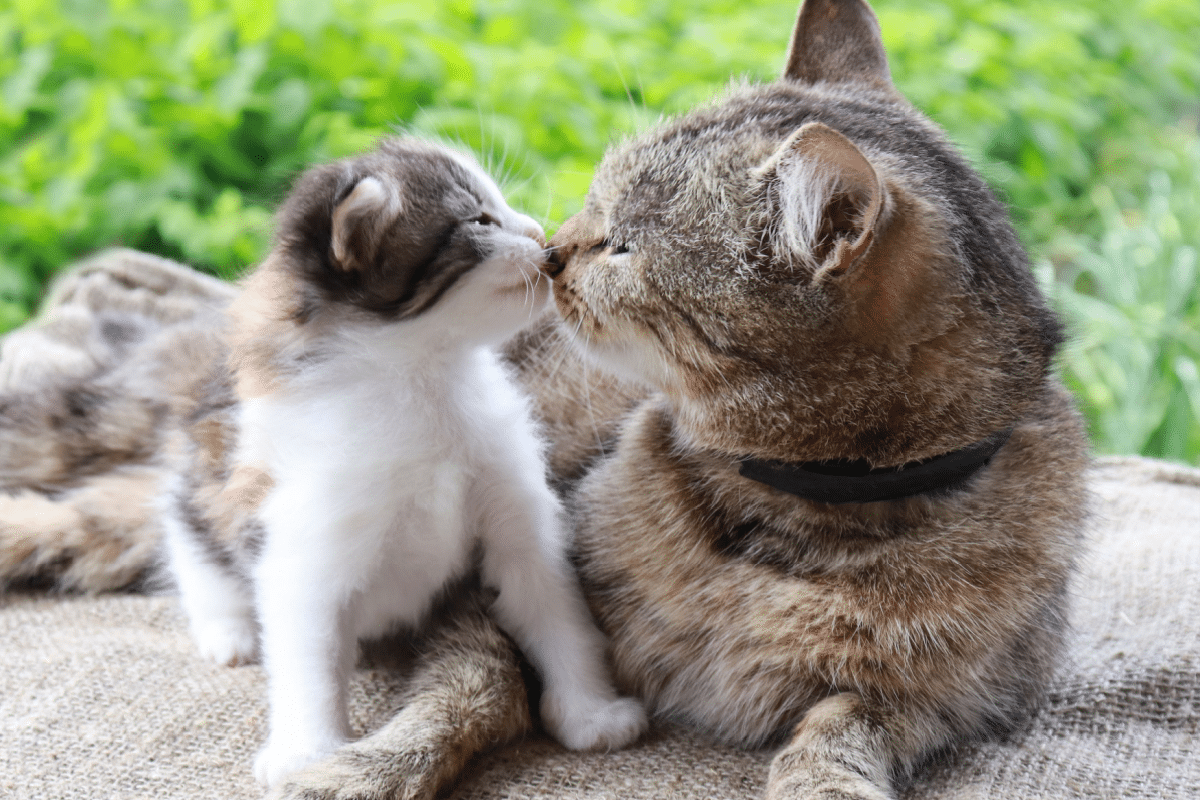
With patience, planning and respect, it is possible to reduce stress and promote a peaceful coexistence between the two animals.
EdiCase Editorial
They often say that adopting a cat is almost a pyramid scheme: whoever takes a feline home ends up wanting to adopt another one shortly afterwards. This happens because these animals easily win over their families. However, when there is already an older cat living in the house, the arrival of a kitten requires attention and planning.
Although kittens are curious, playful and full of energy, the adult cat may interpret this change as an invasion of its territory. Therefore, the presentation must happen gradually, respecting the adaptation time of each animal. Next, check out some simple precautions and increase your chances of building a harmonious coexistence!
1. Prepare a separate environment for the puppy
Even before the first meeting, the ideal is for the puppy to have an exclusive room to stay in for the first few days. This space must have a litter boxbowls of water and food, bed, toys and scratching post. In addition to offering security to the newcomer, this separation reduces the impact of the move on the older cat, who will continue to use its territory normally. During this period, both will be able to perceive each other’s presence through smell and sounds, beginning a calmer adaptation with less stress.
2. Introduce yourself by smell before eye contact
Cats recognize much of their information about other animals through their sense of smell. Therefore, before placing them face to face, exchange blankets, blankets or toys between them so that each one gets to know the other’s scent. An alternative is to wipe one cat’s cheeks with a soft cloth and then the other’s surroundings, allowing odors to be shared naturally.
3. Respect the older cat’s time
Each cat has a different personality and reacts in a particular way to changes in routine. Some quickly accept a new companionwhile others need days or even weeks to feel comfortable. Forcing approaches can increase fear and encourage defensive behavior. Therefore, observe the signs of both and allow the approach to happen at the pace at which the animals demonstrate that they are prepared.
4. Hold first dates in a controlled manner
After the cats are used to each other’s smell, the first visual contacts should happen for short periods. A good strategy is to use a grid, gate to pets or partially open the room door, allowing them to observe each other without direct contact. If both remain calm, the time for these meetings can be gradually increased. If there are intense signs of stress, the ideal is to stop the interaction and try again another day.
5. Never force cats to interact
It is common for the owner to want to bring the two animals closer by holding them on their lap or placing them in front of each other. However, this attitude tends to cause even more insecurity. Cats need to feel like they have the freedom to move away if they feel uncomfortable. Allowing them to choose when to get closer favors a more natural adaptation and reduces the risk of negative experiences at the beginning of their relationship.
6. Provide enough resources for both cats
Dispute for resources is among the main causes of conflicts between felines living in the same house. Therefore, each cat must have easy access to its own litter box, water bowls, food bowl, bed and scratching post. When items are distributed in different parts of the house, the need for competition decreases and both people are able to use the environment more calmly.
7. Associate the other person’s presence with positive experiences
Creating pleasant associations during adaptation makes a lot of difference. It is possible to offer snacks, food or playful moments whenever the cats are close and demonstrating calm. In this way, they begin to relate each other’s presence with pleasurable situations. It is important that these rewards happen without forcing interaction.
8. Give special attention to the older cat
The arrival of a kitten changes the household’s routine and can arouse jealousy in the adult cat. To avoid this feeling, maintain your usual feeding, playing and cuddling times. The older cat needs to realize that it continues to be valued and that its routine has not been completely changed.