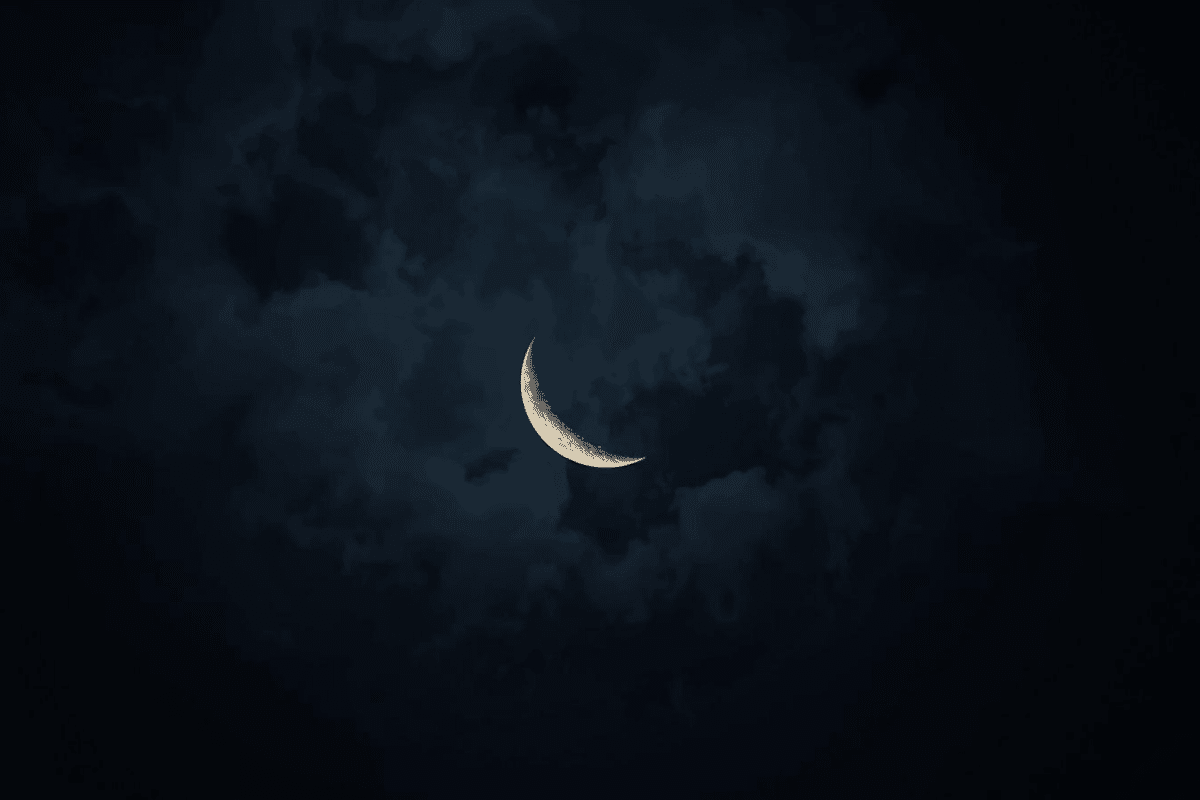
The satellite’s illumination gradually increases each night, making the star stand out even more in the sky.
EdiCase Editorial
This Monday, July 27, 2026, the Moon is in the Crescent phase. According to the National Institute of Meteorology (INMET), this stage began on July 21st, at 8:05 am, and will continue until the entry of the Full phase, scheduled for July 29th, at 11:37 am.
During this period, the visible illuminated portion of the Moon gradually increases each night. This happens because the satellite continues its movement around the Earth, changing the angle at which it receives light from the Sun. Thus, more parts of its illuminated face can be observed from our planet, making the star increasingly evident in the sky.
What is the Crescent Moon?
The Waxing Moon is the second of the four main phases of the lunar cycle and occurs after the New Moon and before the Full Moon. At this stage, the satellite’s apparent illumination becomes increasingly brighter until it reaches its maximum point during the Full phase.
The complete cycle of the Moon’s phases lasts, on average, 29 days, 12 hours and 44 minutes. Throughout this period, the star orbits around the Earth, causing the amount of its visible illuminated surface to gradually vary.
Good time to observe the Moon
The Waxing Moon is considered one of the best phases for observing the details of the lunar surface. At this stage, sunlight falls on the relief at different angles, forming shadows that highlight craters, mountains and valleys, making it easier to see with telescopes, binoculars or even the naked eye. For this reason, the period is highly appreciated by amateur astronomers and photographers who wish to record the evolution of the Moon’s appearance throughout the night.
In the Southern Hemisphere, where Brazil is located, the illuminated portion of the Moon appears predominantly on the left side of the lunar disk. In the first days of the Crescent phase, the satellite It appears on the western horizon shortly after sunset and remains visible for a few hours. As the days pass, it rises later and later and remains in the sky for longer, expanding opportunities for observation.
Crescent Moon Symbolism
In different culturesthe Waxing Moon is often associated with growth, development and expansion. As it represents the gradual increase in light after the New phase, many traditions relate this period to new projects, planning and the pursuit of goals. In traditional agriculture, there are also popular beliefs that associate this phase with plant growth and the appropriate time for certain cultivation activities.
Next phases of the Moon
According to INMET, the next phases of the Moon are:
- Full moon: July 29, at 11:37 am;
- Waning Moon: August 5th, at 11:22 pm;
- New moon: August 12, at 2:37 pm.