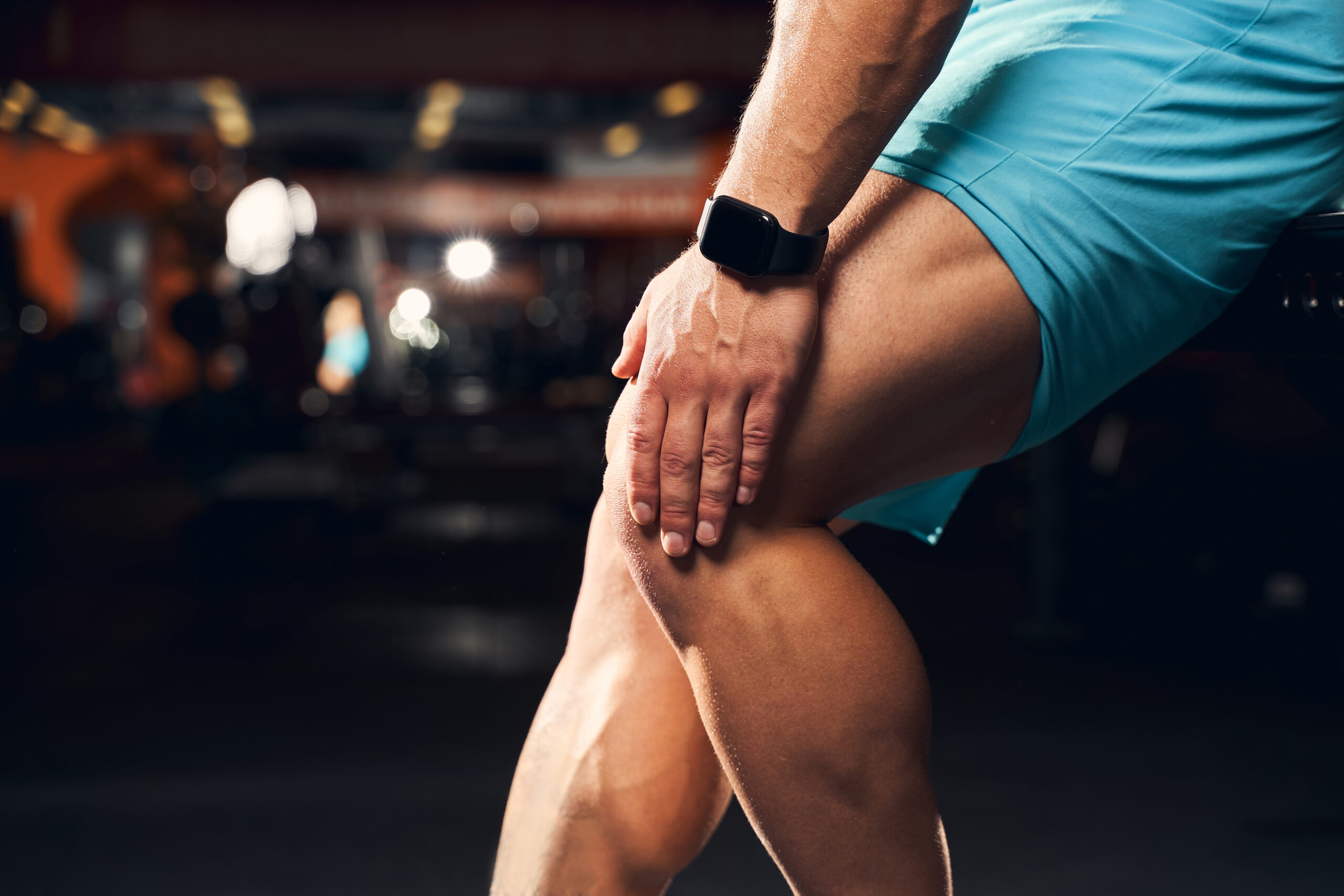
Feeling some discomfort in the knee during training, in many cases, is part of the body’s natural process of adapting to effort. The point of attention is to understand when this sensation follows an expected pattern and when it starts to indicate something that deserves investigation.
When pain stops being common
Mild pain, which appears during exercise and improves afterwards, is usually as expected, however, according to orthopedist Sergio Mauricio, “knee pain stops being a common discomfort during training and becomes a warning sign when it stops being punctual and predictable and starts to be progressive, persistent or limiting”.
Some signs help to identify this moment:
- Pain that gets worse as the days go by
- Change in the way of executing the movement
- Discomfort that persists at rest
- Presence of swelling
- Feeling of instability or stuckness
In these cases, insisting on training without adjustments tends to worsen the condition.
How to differentiate overload from injury?
Understanding pain behavior is what helps differentiate a simple adjustment from a problem that requires more care.
“Overload usually generates controllable pain, proportional to the effort and reversible with load adjustment”, explains Sergio. In this case, small changes in training usually bring improvements within a few days.
Injuries follow a different pattern. “Structural injuries tend to cause more intense, localized pain, which worsens even with load reduction, in addition to associated signs such as swelling, distortion or functional limitation”, he adds.
Some signs help with this reading:
- More intense and localized pain
- It gets worse even with load reduction
- Swelling or feeling of discomfort
- Limitation of movement
Furthermore, evolution is often different. While the overload improves, the injury tends to persist or worsen.
Stop or adapt training?
In most cases, it is not necessary to stop completely. Adjusting your training is usually the most efficient way. Adapting the load, volume and type of exercise allows you to keep the body active within a safe zone, avoiding loss of conditioning and promoting recovery.
Total suspension is an option when there are clearer signs of a more significant injury. Still, this decision must be made based on an adequate assessment, considering the individual situation.
What helps prevent
Prevention involves a well-conducted routine over time. Controlling load progression prevents sudden increases in effort, while muscle strengthening, especially in regions such as the hips and core, improves the distribution of forces in the movement. Correctly executing the exercises also plays a central role, as it reduces unnecessary overload and makes training more efficient.
At the same time, varying the stimuli throughout the week helps to avoid repetitive patterns that wear out the joint – adding to this the importance of recovery. Respecting breaks, sleeping well and observing the body’s initial signs prevents minor discomforts from developing. When this balance is maintained, the knee tends to respond better to the training routine.