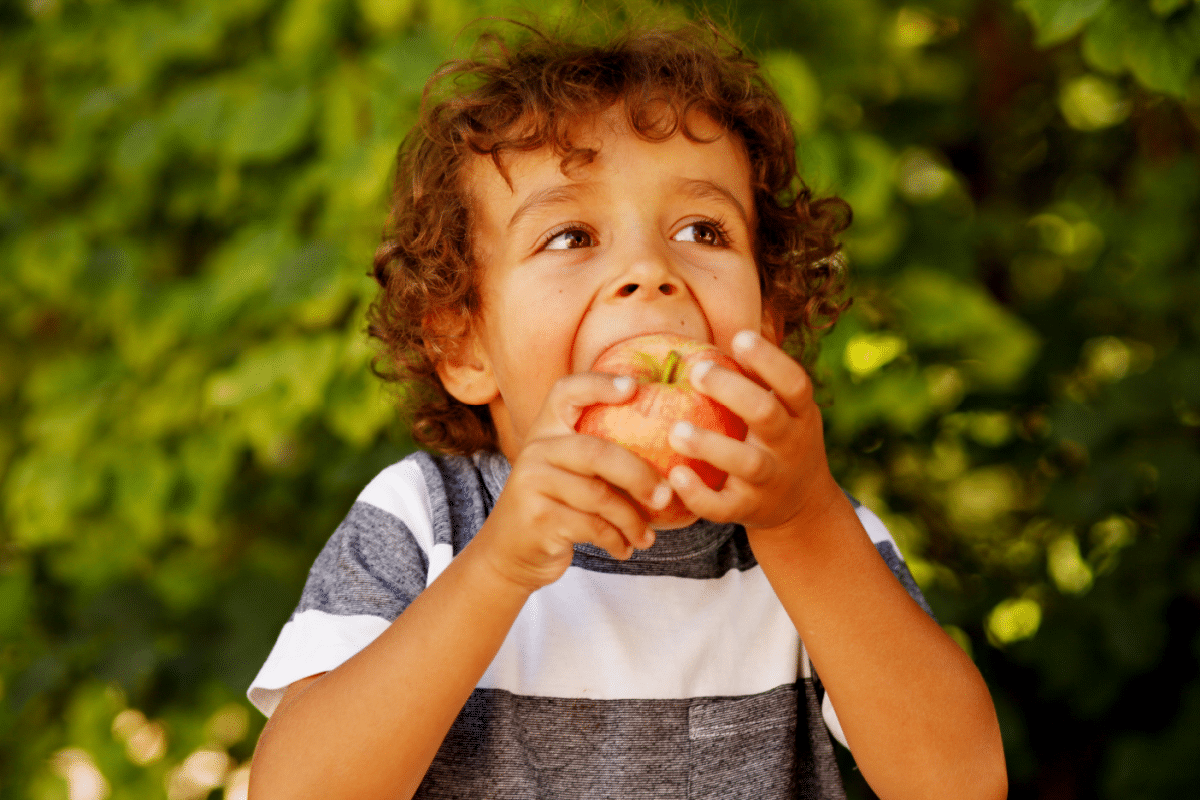
Nutritionist explains how sensory and auditory stimuli during chewing are allies for parents to expand their children’s food repertoire in a light and fun way
EdiCase Editorial
Mealtime is often a battleground for fathers and mothers who face their children’s food selectivity. However, acceptance of a new ingredient goes far beyond taste: appearance, touch and even the sound produced when chewing play an important role in shaping children’s habits.
A famous study conducted at the University of Oxford called “The Role of Auditory Cues in Modulating the Perceived Crispness and Staleness of Potato Chips“, published in the scientific journal Journal of Sensory Studies, proved that the sound of biting directly changes the perception of freshness and crunchiness of food. This shows that the eating experience is the result of the integration of all our senses.
In family routines, crunchy foods with different textures work as an excellent strategic tool to make the dish more attractive. “The perception of food does not depend only on flavor. Characteristics such as texture, appearance and even the sound produced during chewing actively participate in the eating experience”, explains Papapá nutritionist, Carolina Donan.
In this context, crunchiness stimulates a more positive relationship with food. “The crunchiness attracts attention because it combines tactile and auditory stimuli that make eating much more engaging and fun for little ones”, he adds.
The role of textures in your child’s development
Varying the consistency of what is offered not only serves to overcome food refusal, but is also a recommendation of the country’s main health guidelines, such as the “Food Guide for the Brazilian Population”, from the Ministry of Health.
The progressive offer of foods with firm and airy textures favors the development of oral skills, helps to strengthen chewing muscles and prepares the child for a good food acceptance throughout childhood.
How to introduce foods in early childhood
To help parents and guardians navigate the food introduction phase more lightly, the specialist has separated 3 practical tips to apply in everyday life:
1. Bet on the fun factor
Foods in elongated formats (stick style) or that make a fun sound when bitten into, awaken the child’s natural curiosity, taking the burden of eating away.
2. Prioritize clean ingredient lists (clean label)
When looking for practical snacks for everyday life, read the labels. Choose options without added sugar, artificial colors or preservatives, ensuring a safe food introduction.
3. Have patience and constancy
Frequent exposure and familiarity with the different presentations on the plate are more important than immediate acceptance. Learning is gradual.
“When children have real opportunities to explore different flavors, aromas and textures in a positive, pressure-free environment, they expand their repertoire and develop a healthy relationship with food in the long term”, concludes Carolina Donan.
By Sarah Corazza