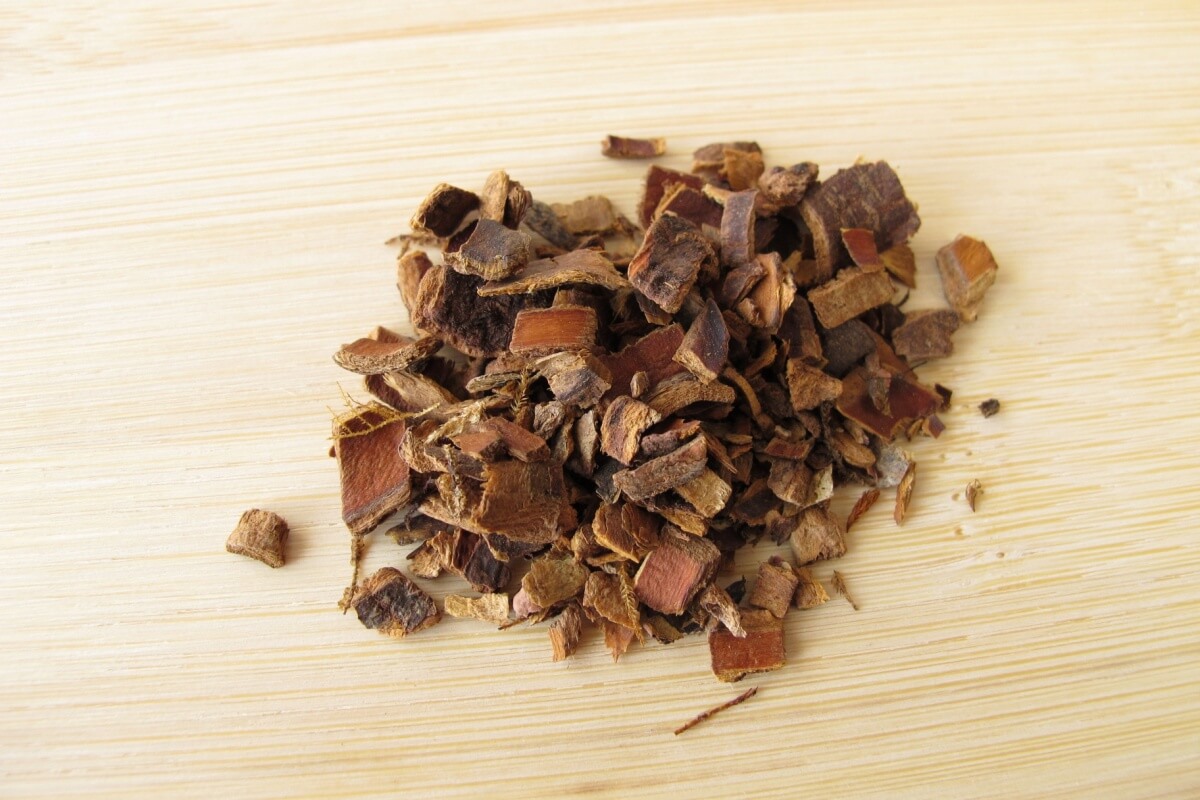
The sacred shell (Rhamnus purshiana DC.) is a medicinal plant with a long tradition of popular use, especially recognized for its laxative properties. Of North American origin, it is listed in the National List of Medicinal Plants of Interest to the Unified Health System (ReniSUS).
The plant grows as a shrub or small tree, reaching 10 meters in height, with elliptical leaves, greenish flowers, black fruits and reddish-brown bark — and this bark is precisely the part used in medicine.
According to the ReniSUS Systematized Information booklet, published by the Ministry of Health in 2021, the bark only must be used after one year of collection or undergo a specific heating process, to ensure safety and effectiveness.
Next, see the main uses and properties of cascara-sagrada!
1. Fight constipation
The best-known and documented use of cascara is as a mild laxative for occasional constipation. Including, according to Annex I of RDC Anvisa No. 10, of March 9, 2010, of the resolution that provides for the notification of plant drugs with the National Health Surveillance Agency (Anvisa) and provides other measures, the decoction of the plant can be used against occasional constipation.
To this end, the document from the National Health Surveillance Agency (Anvisa) recommends consuming half to a cup of tea before bed. The effect happens in two ways: the plant accelerates the movement of the large intestine and, at the same time, prevents it from absorbing excess water — which softens the feces and facilitates evacuation.
2. Stimulating the body’s cleansing
Cascara is often associated with cleansing and detoxification routines — and there’s a reason for that. By stimulating the emptying of the intestine thick, the plant accelerates the elimination of accumulated contents, reducing the time in which waste remains in contact with the intestinal mucosa. This mechanism is listed in the Ministry of Health’s booklet (2021), which records the use of the plant in contexts of intestinal purification and regulation in different cultures throughout history.
However, use must be punctual and responsible. Used continuously or in high doses, it can cause electrolyte imbalance and the intestine’s dependence on external stimulation to function.
How to make cascara sacred tea
The preparation method recommended in Annex I of RDC Anvisa N° 10, of March 9, 2010, is decoction, that is, boiling the bark directly in water. The process is simple: use half a teaspoon of dried peel (about 0.5 g) for a cup of water (150 ml). Boil for a few minutes, strain and drink half to a cup, preferably before bed. The effect usually appears a few hours later.
Contraindications and precautions
Cascara Sagrada is not suitable for everyone. It should not be used by people with intestinal problems, such as colitis, Crohn’s diseaseintestinal obstruction or abdominal pain without a defined cause. It is also contraindicated for pregnant women, women who are breastfeeding and children under 10 years of age. Anyone who has kidney problems should pay extra attention: plant substances can accumulate in kidney tissue and cause imbalance in the body.
Use, in turn, should not exceed one week. After all, prolonged consumption can cause abdominal pain, diarrhea, nausea, vomiting and a condition called cathartic colon, in which the large intestine loses its tone and stops functioning properly. Always consult a doctor or pharmacist before starting use.