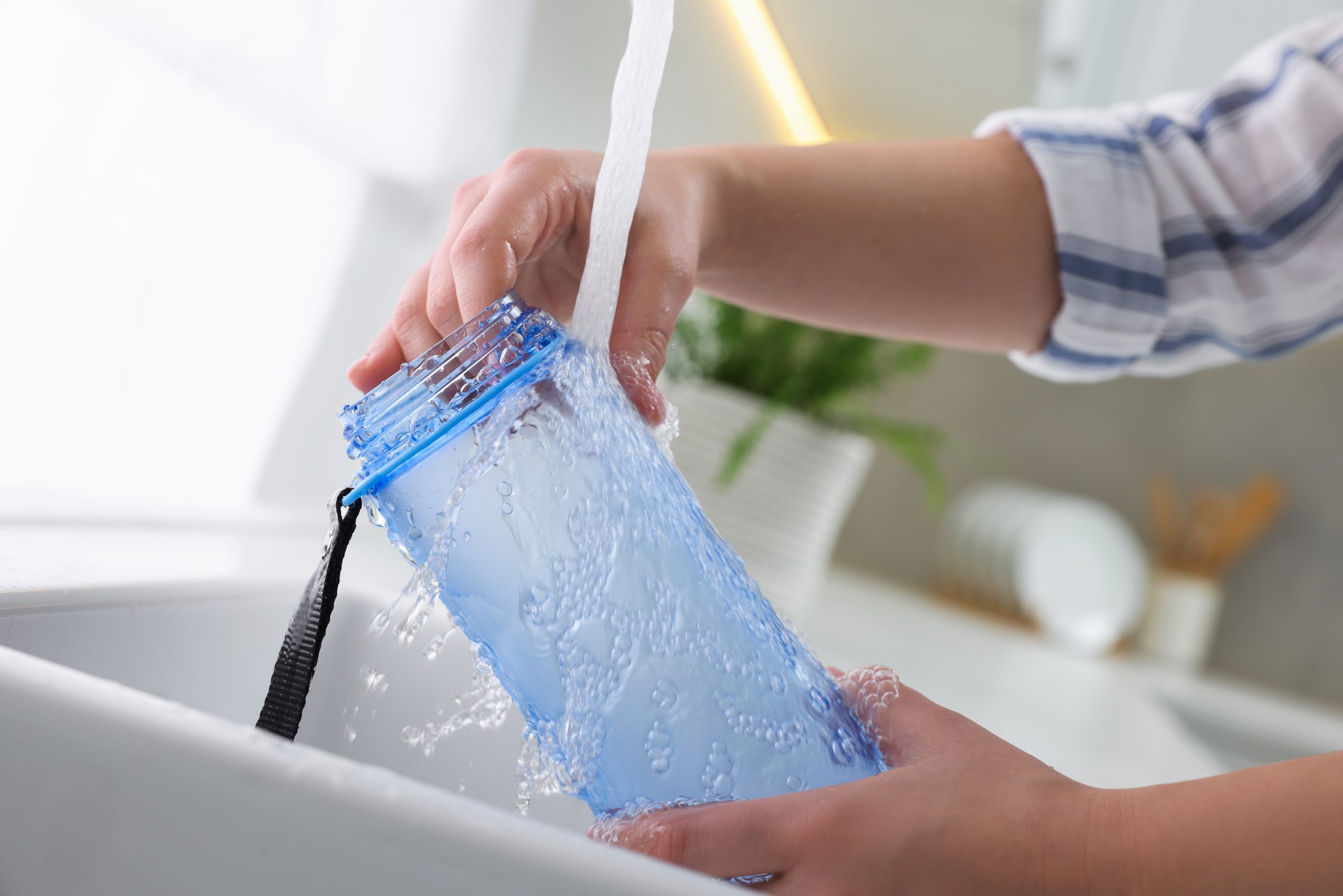
If you are the type who carries the bottle up and down – in training, at work or even indoors – it is worth being aware: the frequency of cleaning your bottle makes all the difference to your health.
According to Nathalia Schnaak Sports Nutritionist and Clinicthe ideal is to wash the bottle every dayespecially if it is used throughout the day. Even if you only put water, contact with mouth, residue and moisture favors the proliferation of bacteria, fungi and yeast which can cause from allergic reactions to infections.
Daily cleaning and deep sanitation
The care routine begins with a good Daily wash with neutral soap and water. Once a week, it is worth investing in a deeper hygiene: soak the bottle for 10 to 15 minutes in a solution with vinegar or baking soda diluted in warm water. Use a soft brush or sponge to reach all parts and then rinse well and Let it dry completely outdoorsavoiding moisture accumulation.
What microorganisms can accumulate?
With time and lack of cleaning, the bottle can become the home of microorganisms such as:
- Bacteria: E. coli, Staphylococcus aureus, Pseudomonas aeruginosa
- Fungi: Aspergillus, Penicillium
- Yeast: Candida albicans
These agents easily develop in humid and hot environments – just like the interior of a poorly washed bottle.
And the type of material makes a difference?
Yes. See what changes from one material to another:
- Plastic: tends to accumulate odors and bacteria faster, and easily scratching, creating small hiding places for microorganisms.
- Stainless steel: It is more resistant, but also requires care, especially with drying.
- Glass: retains fewer odors and microorganisms, but still needs to be regularly sanitized to avoid mold, especially if stored wet.
Keep an eye on these signs
Did you notice a strange smell, different taste, visible waste or any part of the bottle with mold? This is a warning sign! These symptoms indicate the presence of microorganisms and the need for immediate cleaning.